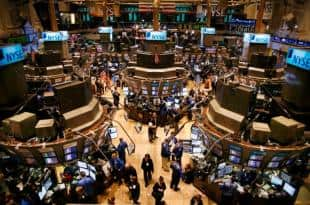
9 dicembre forconi: Wall Street
Visualizzazione post con etichetta Wall Street. Mostra tutti i post

domenica 30 dicembre 2018

Questo è esattamente il tipo di comportamento che ti aspetteresti durante l'implosione del mercato azionario ...

Se un medico ti dice che le condizioni del suo paziente oscillano su e giù selvaggiamente, è un buon segno o un brutto segno? Ovviamente la risposta a questa domanda è abbastanza ovvia. 
E se un medico ti dice che le condizioni del suo paziente sono "stabili", è un buon segno o un brutto segno? 
Proprio come nel mondo della medicina, l'instabilità non è qualcosa che è una cosa desiderabile a Wall Street, e in questo momento stiamo assistendo ad un'estrema volatilità quasi quotidianamente. Giovedì, il Dow era già sceso di diverse centinaia di punti quando sono uscito a fare la spesa con mia moglie, e nel punto più basso della giornata era sceso di 611 punti. Ma poi un "miracolo è successo" e il Dow ha chiuso la giornata con un aumento di 260 punti. Come ho spiegato  ieri , questo è esattamente il tipo di comportamento che ci si aspetterebbe durante un mercato orso caotico.
Come osservato da Fox Business, i rally del mercato orso sono in genere  "acuti, veloci e generalmente brevi" . Ho immaginato che lo slancio di mercoledì si sarebbe ripreso nella prima parte del giovedì, quindi sono rimasto sorpreso quando il Dow era in svantaggio da quando eravamo quasi arrivati ​​a metà giornata. Ma poi verso le 14:00 abbiamo assistito a  una straordinaria ondata di mercato ...
Il Dow Jones Industrial Average ha registrato  uno swing di 865 punti in meno di due ore . L'indice blue-chip era sceso a metà pomeriggio di oltre 500 punti per tagliare i guadagni della sessione precedente a metà, prima che i cacciatori di occasioni e le  coperture corte  trasformassero un grande calo in un guadagno modesto.
Uno swing di 865 punti in meno di due ore non è "normale".
In realtà, è più lontano dal "normale" che puoi ottenere.
Parliamo di breve copertura per un momento. Durante le enormi flessioni del mercato, gli speculatori spesso cercano di fare molto denaro molto rapidamente abbreviando le scorte. Ma se la quantità di moto cambia improvvisamente, quei venditori allo scoperto possono essere catturati con i pantaloni abbassati e le conseguenze possono essere piuttosto drammaticheQuanto segue viene da  Marketwatch ...
In effetti, i veterani del mercato avvertono che massicci raduni di un giorno sono spesso più caratteristici delle flessioni, in quanto i sell-off portano a condizioni tecniche di ipervenduto in modo significativo che lasciano i mercati maturi per una copertura breve solo per lasciare il posto a una nuova vendita una volta esaurita la frenesia degli acquisti forzati. . Gli investitori che liquidano un titolo scommettono essenzialmente sul fatto che il suo prezzo cadrà prendendo in prestito per la prima volta le azioni, ma questi commercianti possono essere costretti a riacquistare azioni se i prezzi oscillano improvvisamente, il che, a sua volta, può amplificare le oscillazioni dei prezzi .
Inoltre, sembra che giovedì ci sia stato più del "riequilibrio forzato delle pensioni" di cui  Zero Hedge ha parlato ...
Sicuramente ha l'odore di una grossa riassegnazione delle pensioni quando  le scorte del momento hanno iniziato a salire, le obbligazioni sono state scaricate ...
Nessun crollo del mercato azionario nella storia degli Stati Uniti è mai andato in una linea retta. Ci sono sempre alti e bassi enormi durante ogni incidente di mercato, e questo crollo del mercato non fa eccezione.
In definitiva, non c'è modo che tu possa interpretare il comportamento del mercato negli ultimi giorni come  "sano" ...
Ecco il problema: come abbiamo  discusso la scorsa notte , dal 1990,  ogni inversione comparabile - con poche eccezioni - è arrivata durante il mercato orso 2008-2009.  Secondo i dati di Bloomberg, in otto precedenti mercati ribassisti l'S & P 500 ha registrato rally superiori al 2,5% in più di 120 volte rispetto al benchmark, che è passato da picco a valle. Dal crollo di Lehman alla crisi finanziaria di marzo 2009, lo S & P 500 ha registrato un rialzo di oltre il 4 per cento in 13 diverse occasioni.
Questo non è il tipo di azione sui prezzi che si vede nei normali mercati rialzisti ", ha detto il commerciante alle vendite azionarie di Robert Baird, Michael Antonelli. "Questa è solo una faccia che strappa un breve rally di copertura. Sono al 100% che non dico che siamo in una situazione come quella del 2008, ma guardiamo al 10 ottobre 2008 al 13 ottobre 2008: il mercato è cresciuto di quasi il 12% in un giorno. Dal 27 ottobre al 28 ottobre 2008, è aumentato dell'11%. "
Nel frattempo, sembra che uno dei rivenditori più iconici d'America stia per andare in fiamme.
Per anni ho avvertito che alla fine Sears sarebbe "andato a zero", e se un ultimo tentativo di salvataggio di un fosso non si materializzerà entro la fine della giornata di venerdì,  Sears sarà liquidato ...
Il datore di lavoro di oltre 68.000 ha presentato istanza di fallimento in ottobre. Il suo ultimo tentativo di sopravvivenza è una proposta da 4,6 miliardi di dollari avanzata dal suo presidente, Eddie Lampert, per acquistare la società dalla bancarotta tramite il suo fondo di copertura, ESL Investments. ESL è l'unico partito che offre l'acquisto di Sears nel suo insieme, persone che conoscono la situazione a CNBC. Senza questa o quell'altra offerta, i liquidatori spezzeranno la compagnia.
Ma mentre Lampert fissa una scadenza del 28 dicembre per presentare la sua offerta, sta rapidamente perdendo tempo. A partire da giovedì pomeriggio, Lampert  non aveva né presentato la sua offerta, né ha arrotondato i finanziamenti , hanno detto le persone familiari.
L'inevitabile scomparsa di Sears potrebbe essere vista da un miglio di distanza, e la stessa cosa si può dire del paese nel suo insieme.
Il nostro standard di vita alimentato dal debito è stato sostenuto dalla più grande abbuffata del debito nella storia del mondo, e Wall Street è stato trasformato nel più grande casinò dell'intero pianeta.
L'intero sistema economico degli Stati Uniti è diventato un enorme schema Ponzi, e tutti gli schemi di Ponzi alla fine crollano.
In questo momento, siamo nelle prime fasi di un gioco che ci vorrà del tempo per giocare completamente. Il pessimismo che ha attanagliato Wall Street sta iniziando a diffondersi in tutta la popolazione generale, e molti esperti sono rimasti sbalorditi nell'apprendere che la fiducia dei consumatori è diminuita  per un secondo mese consecutivo ...
La fiducia che gli americani sentono nell'economia è scesa per il secondo mese consecutivo e ha toccato il livello più basso dalla scorsa estate, forse un segnale che le preoccupazioni per l'espansione americana di 9 anni e mezzo si sono diffuse da Wall Street a Main Street.
L'indice di fiducia dei consumatori è sceso a 128,1 questo mese da una revisione 136,4 di novembre,  ha detto giovedì il Conference Board . Gli economisti intervistati da MarketWatch avevano previsto una lettura di 133,3.
Se sei stato un visitatore abituale dei miei siti web, niente di ciò che accadrà nei prossimi mesi dovrebbe essere una sorpresa per te.
Le inevitabili conseguenze per decenni di decisioni estremamente sciocche stanno iniziando a rotolare, e lo scoppio di "The Bubble To End All Bubbles" sarà al di là straziante.

domenica 29 aprile 2018

The Crash Of 1929: "Can It Happen Again?"

In the 4th of February, we published a blog entry detailing the similarities of the current stock market environment with that before the stock market crash in 1987. On February 5th, the Dow Jones Industrial Average (DJIA) experienced the worst daily point decline of its history. Since then, the stock market has recovered, but are we out of the woods?
At the aforementioned entry, we also warned that the situation in the global economy actually resembles more of the time before the Great Depression than that before of the Black Monday in 1987. Worryingly, the same holds for the US equity markets. In fact, almost all of the developments that led to the Great Crash of 1929 are already visible in the US. We may thus be heading towards the worst asset market crash in 90 years.
Prequisites: The ‘Roaring Twenties’
The 1929 crash marked the end of the ‘Roaring Twenties’. The era got its name from consumer and stock market booms driven by the automobile and building sectors. The gold standard and the neutralization of all gold purchases from abroad by the newly created central bank, Federal Reserve or Fed, controlled the consumer price inflation. Due to low inflation, Fed had only limited incentives to intervene on the speculation by increasing the short-term interest rates. The easy credit era was let to persist fueling the boom in the consumer durables, commercial property market, automobile industry and the stock markets.
The tide switched in January 1928. The Fed decided that the boom had gone far enough and started to raise its discount rate and sell its holdings of government securities in effort to stem the speculation. But, rising money market rates made the brokers’ loans viable options for the bank loans because the former were mostly funded by the large balance sheets of corporations. The call loan rates were also clearly higher than the Fed discount rate, which meant that banks were able to borrow cheaply from the Fed and earn a nice margin on loans to investors. The higher interest rates set by Fed thus increased both the bank and non-bank funds available for stock market speculation. Contrary to the aim of the Fed, the financial conditions eased further and the speculation increased. The twenties kept on roaring.
The Great Crash
In 4 December 1928, President Coolidge had given a reassuring State of the Union speech and 1929 started with positive expectations. The stock market kept rising and the consumer boom continued. It was a common belief that earnings and dividends are growing because of the systematic industrial application of the science together with the development of modern management technologies and business mergers. Still, the first half of 1929 was marked with increasing volatility.
By the summer a dubious mood started to creep. The dividend growth was solid but the economy started to look mature. The first hints about the approaching recession arrived in July 1929 as the index of the industrial production of the Fed diminished. Mixed news and rising interest rates in the US and abroad warned of a looming recession. In September, the stock market started to drift downwards. The fear of a recession started to set in.
On Thursday October 24, after a turbulent week, the prices hovered for all while at the start, but then fell rapidly and the stock ticker started to lag behind. The prices kept falling and the ticker fell further behind. The pace of the sell orders grew at an increasing rate and by eleven o’clock a ferocious selling had gripped the market. A few selected quotations given by the bond ticker showed that the that the current values were far below the now seriously lagging tape. Margin calls started to roll in and many investors were forced to liquidate their stock holdings. The increasing uncertainty made the investors even more scared and by eleven-thirty there was a sheer panic. The frenzy of selling could even be heard outside the New York Stock Exchange, where crowds gathered.
At noon, the reporters learned that several notable bankers had gathered at the office of the J.P. Morgan & Company. At one thirty, the vice-president of the New York Stock Exchange (NYSE), Richard Whitney, appeared on the trading floor and started to make large purchases of variety of stocks (starting from the Steel post). This had a clear message: the bankers had stepped in. The effect was imminent. The fear eased and the stocks rallied.
On Friday, the volume of trading was large, but the prices held up. During the weekend, there was a sense of relief. The disaster had been avoided and the actions of the bankers were celebrated. But then came Monday.
On Monday, October 28, the market opened to uneasy tranquility which was quickly broken. The selling started, then accelerated, and by noon the market was in a full panic mode. The bankers gathered again but the savior was never seen on the floor. Heavy selling continued throughout the day, and the market melted down, with the DJIA closing down by almost 13 percentage points for the day. After the close, there was not a word from the bankers or from anyone else, for that matter. During the night, a panic spread through the nation.
On Tuesday, October 29, the selling orders flooded the NYSE in the open. The prices plunged right from the start, feeding the panic. The sell orders from all over the country overwhelmed the ticker and sometimes even the traders. During the day, massive blocks of stocks were sold indicating that the ”big players” (banks, investment funds etc.) were liquidating. During the worst selling periods, there was a countless number of the selling orders but no buyers. This meant that, at times, the markets were in a complete free fall. There was a brief rally before the end of trading but despite this, the ”Black Tuesday” was one of the most brutal days at the NYSE with the DJIA falling by 11 % with heavy volumes.  Within a week, DJIA had lost 29 % of its value.

The daily closing values of Dow Jones Industrial Average during the year 1929. Source: GnS Economics, MacroTrends

Are we in a time loop?
The crash of 1929 marked the end of a long stock market boom fed by several years of easy credit. Because inflation was low for most of the 1920’s, Fed did not bother to curb the speculation by rising rates and when it did, the rise was too little too late. The signals for an upcoming recession broke the highly over-valued stock market in 1929. Actually, for example the dividends grew even in the last quarter of 1929 but the faith for the future of the market was broken and the investors panicked.
Currently, we are in a situation where, according to several metrics, the stock market is the most over-valued in the history of the NYSE. The central banks, with their orthodox and unorthodox monetary policies, have fed the asset market mania for nine years now but, currently, they are in a tightening cycle. Moreover, the global economy is in a risk of a dramatic slowdown.
This indicates that the main components of the crash of 1929: an over-valued stock market, a central bank tightening cycle (higher interest rates) and a slowing economy are almost all present in the US. We will thus soon know how well the history rhymes.
The historical accounts are based on the “The Great Crash 1929“ by John K. Galbraith, “The stock market boom and crash of 1929 revisited” by Eugene White and on “Lessons from the 1930’s Great Depression” by Nicholas Crafts and Peter Fearon.
Submitted by GnS Economics

giovedì 26 aprile 2018

How Wall Street Banks "Masked" A Record $350 Billion In Subprime Exposure

The latest monthly auto-loan data from the Fitch Auto ABS Index showed something very troubling: subprime delinquencies 60 days or more past due on the secondary market rose to 5.76% in February, the highest they’ve been in 22 years, or since 1996, and blowing past the highs hit during the 2008 financial crisis. At this rate, a record high print is assured in a month or two.
The data seemed confusing, almost a misprint to Hylton Heard, Senior Director at Fitch Ratings who said that "it’s interesting that [smaller deep subprime] issuers continue to drive delinquencies on the index in an unemployment environment of around 4%, low oil prices, low interest rates — even though they are rising — and a positive economic story overall." In other words, there is no logical reason why in a economy as strong as this one, subprime delinquencies should be soaring.
As Brian Ford of Kroll Bond Rating Agency added "the securitized universe is a small subset of the overall universe of auto loans, but it still gives you a pretty good indication of the health of the consumer." If that is the case, the US consumer is doing far worse than the near-record S&P and 4.0% unemployment rate would suggest.
Making matters worse, rising interest rates have made interest payment on subprime loans increasingly unserviceable for those who are currently contractually locked up - hence the surge in delinquency rates - or those US consumers with a FICO score below 620 who are contemplating taking out a new loan to buy a car, something we touched on three weeks ago in "Subprime Auto Bubble Bursts As "Buyers Are Suddenly Missing From Showrooms."
Yet while the subprime bubble is clearly bursting on the demand side, courtesy of rising rates and a 3M USD Libor above 2.3%, Wall Street has remained relatively sanguine on the broader financial implications for one reason: there is, allegedly, no concentration in exposure among bank lenders, and thus no concern of a rerun of the subprime bubble bursting on Wall Street similar to 2007/2008. To be sure, following the financial crisis, big banks appeared to have learned their lesson and turned rather conservative when it comes to potential subprime borrowers, insisting on such things as income verification and other details, which has made room for specialty lenders with fewer such compunctions.
Meanwhile, as we highlighted two weeks ago, Wall Street's exodus from the sector meant a gaping market share opportunity, which led to the emergence of scores of "nonbanks": smaller, specialized subprime auto lenders, some backed by private equity firms looking for leverage upon leverage. These lenders make money by borrowing from big banks to fund various high-interest loans to subprime customers. The interest margin, or difference between the rates banks charge those lenders and the rates lenders charge their subprime customers (often in the double digits) is their profit.
However, even here the breaking point appears to have been reached: as we pointed out in early April, three of them – Summit Financial Corp, Spring Tree Lending, and Pelican Auto Finance – recently collapsed into bankruptcy or were shut down. Allegations of fraud and misrepresentations are swirling through the bankruptcy filings.
Still, the fact that exposures were largely siloed-off from conventional banks meant that no matter how bad things get - or will get - would suggest there is no risk of a systemic crisis. Or is there?
After all, these specialized, direct lenders who hand out auto loans, revolving consumer loans, payday loans, and mortgages to America's "subprime" get their funding from somewhere. That somewhere, it will is come as no surprise, is Wall Street which while not making loans directly to subprime borrowers, is on the hook for hundreds of billions in debt it has issued to fund the specialized subprime borrowers which then turn around and do lend out the money to subprime borrowers, at far higher rates of both interest and delinquency.
Call it one degree of separation between banks and subprime borrowers.
Consider the case of Exeter Finance, which was acquired by Blackstone in 2011, and which is one of America's larger specialty subprime lenders. As the WSJ rhetorically asked recently, "where does Exeter get the money to make subprime auto loans?" The answer: "From Wells Fargo and Citigroup. They have helped lend Exeter $1.4 billion for that very purpose."
And therein lies the rub: while banks have been wise to "mask" their exposure to the subprime sector, their unquenchable desire to lend out money and collect interest means that Wall Street may well be on the hook when the next subprime bursts. In fact, according to FDIC filings and WSJ calculations, bank loans to Exeter and other nonbank financial firms quietly increased sixfold between 2010 and 2017 to a record high of nearly $345 billion. They are now one of the largest categories of bank loans to companies.
Of course, banks will push back and say their new approach of lending to the nonbank lenders is safer than dealing directly with consumers with bad credit and companies with shaky balance sheets. Yet, as the WSJ observes, the funding relationships mean that banks are deeply intertwined with the riskier loans they say they swore off after the financial crisis.
Meanwhile, there are numerous vivid examples from the crisis days demonstrating just how incestuous the subprime funding relationships are: one such case was the Montgomery, Ala.-based Colonial Bank, which became one of the largest bank failures of the era after a nonbank mortgage lender misappropriated more than $1.4 billion from its credit facility with the bank, according to the DOJ.
And yet, flooded with cheap money, banks were eager to delude themselves that just because they were no longer directly facing subprime customers, the risk was gone: “It’s very easy for people to deceive themselves over whether risk has migrated,” said Marcus Stanley, policy director at Americans for Financial Reform, a nonprofit organization that advocates for tougher financial regulation.
Comfortably wrapped in this delusion, banks launched on a historic lending spree, which as noted above, sent bank loans outstanding to nonbank, subprime lenders, from $50 billion at the start of the decade, to $345 billion at the end of 2017.
To be sure, what banks' total indirect exposure to subprime loans – not just auto loans, but also subprime mortgages, and subprime consumer loans – is, as Wolf Richter notes, a bit of a mystery, although one can use regulatory filings to put together the bigger pieces of the puzzle. According to FDIC reports, bank loans to nonbanks lenders have soared, and here are the top contenders:
  • Wells Fargo: $81 billion, up from $13.4 billion in 2010
  • Citigroup: $30 billion, up from $4.1 billion in 2010
  • Bank of America: $30 billion, up from $2.8 billion in 2010
  • JP Morgan: $28 billion, up from $10.4 billion in 2010
  • Goldman Sachs: $22 billion
  • Morgan Stanley: $16 billion
And visually:
One can see why, during the period of record low rates, banks would jump over each other to lend money to the nonbanks whose net interest margin was a number the big banks could only dream of, burdened down by regulation.
In the case of the abovementioned Exeter, the company initially tapped the $1.4 billion line of credit to extend billions of dollars of loans since its 2006 founding. Then Barclays and Deutsche Bank joined Wells Fargo and Citigroup to provide the facility. It eventually bundles its loans into securities and sells them to private investors, using the proceeds to pay back the banks, in addition to paying them fees.
Of course, before the financial crisis, there was no need for nonbanks: the typical subprime-auto customer would have walked into a retail branch of a Wells Fargo or Citigroup and gotten a loan directly, and within minutes. However, after crisis, regulators ended the party and Wells Fargo closed its subprime-lending subsidiary in 2010 and dialed back from auto lending more broadly in 2016. Citigroup sold much of its auto lending unit.
This resulted in a cash bonanza for nonbanks who were generally unregulated, as well as a feeding - or rather lending - frenzy for banks:
By 2016, loans to nonbanks grew to the fourth-largest category of bank lending to companies, up from the 11th in 2012. Around that time, officials from the Office of the Comptroller of the Currency reviewed the exposure at more than a dozen banks, according to a person familiar with the matter.
The regulators looked at the types of nonbanks the banks were lending to, whether those loans were properly secured by collateral and whether there were any concentrations of risk, the person said. At the time, the OCC found the exposure manageable.
it also meant that in addition to a line of willing bank lenders, there were countless PE firms desperate to take these firms private. As Richter notes, among the PE firms that plowed into the auto loan subprime businesses was Blackstone, which acquired a majority stake in Exeter Finance in 2011. The result was a churn in the corner office, and Exeter cycled through three CEOs. As of September 2017, Exeter charged off about 9% of its loans, according to S&P Global, cited by the Wall Street Journal. At the same time, lender Wells Fargo’s own "pristine" auto-loan portfolio experienced charge-offs of only 1%, suggesting that while the profit impact is magnified through leverage, the risk exposure is artificially reduced.
But why are alarm bells not going off yet?
Well, banks traditionally require nonbanks to commit the loans they make as collateral for the bank loan. And they will only lend the nonbanks an amount equivalent to a portion of the collateral—meaning a much higher-than-expected share of the loans would have to go bad for the bank to lose money.
Of course, the lent money still ends up with people with poor credit. The typical Exeter customer, for example, has a FICO score of around 570 on a range of 300 to 850. And, as the chart at the top of this article show, the delinquency rates on subprime loans are finally soaring, and have even surpassed losses encountered during the financial crisis.
Meanwhile, nonbanks like Exeter do everything in their power to take their exposure off the books, and securitize as much as possible: it will create subprime asset-backed securities that it tranches and sells in slices as bonds to investors, while potentially hanging on to the riskiest junk-rated slices that take the first losses. At the same time, there is intense interest in the higher-rated slices. Exeter then uses the proceeds to pay down the credit lines, which creates room to fund new business, grow the company and provide even more loans to subprime consumers.
Banks, in the meantime, remain exposed via the original credit line to Exeter and its loans. This works really well, and the fees and spreads are really sweet... until consumers begin to default more than anticipated, which is the case now, as we showed above:
While banks have provisioned for losses, and typically will lend out at low Loans-To-Value, the truth is that nobody knows just how bad recovery rates will be this cycle: some, such as JPMorgan, have estimated that during the next recession (or even before it), recovery rates may be the lowest ever observed, which would suggest that banks and their $345 billion in loans to nonbanks, is woefully overexposed to what is coming.
The truth, however, is that until we go through the end of the credit cycle (which as both Morgan Stanley and Bank of America now warn, is fast approaching), nobody really knows or has a full grasp of the full magnitude of the potential subprime losses, and certainly not the banks, as Bank of America recently found out in the bankruptcy of tiny nonbank lender, Summit Financial, which BofA accused of misreporting losses from soured loans. The good news: Summit was tiny, and losses will be a rounding error for BofA.
But now that rates are rising, and defaults on auto subprime loans exploding, BofA suddenly "finds" itself with $30 billion, and Wells Fargo is facing a further $81 billion in exposure to subprime loans that the banks are, if only on paper, not exposed to: numbers which are clearly material and would have a dire impact on the banks' capitalization and market cap. Which begs the question: will subprime be the proverbial lightning that strikes twice?
Fonte: Z.H.

mercoledì 7 febbraio 2018

COSA C’È DIETRO IL ‘CRASH’ DI WALL STREET (CHE NEL FRATTEMPO SI È RIPRESA)?

IN AMERICA E' GERMANIA E' PARTITA LA CRESCITA DEI SALARI DUNQUE DEI REDDITI, DEI CONSUMI E DEI RICAVI AZIENDALI. UNA BUONA NOTIZIA PER TUTTI, TRANNE PER I MERCATI, ASSUEFATTI DALLA DROGA DELLE BANCHE CENTRALI 

L’INDICE DELLA VOLATILITA': COS’È IL VIX E PERCHÉ CROLLANO I MERCATI

1. IL BUG CHE HA FATTO SCATTARE IL «FLASH CRASH» DI WALL STREET
Morya Longo per ‘Il Sole 24 Ore

WALL STREET BORSA NEW YORK STOCK EXCHANGEWALL STREET BORSA NEW YORK STOCK EXCHANGE
Vedere giovedì e venerdì i mercati terrorizzati per l’aumento delle retribuzioni negli Stati Uniti e per le rivendicazioni salariali in Germania, fa comprendere ancora una volta quanto le Borse siano distanti dall’economia reale. La crescita dei salari (dunque dei redditi, dei consumi e in ultima analisi dei ricavi aziendali) è il grande anello mancante di questa ripresa economica globale che per ora ha prodotto più diseguaglianze che benessere. Se le retribuzioni aumentassero, come iniziano a fare in Usa e Germania, dovrebbe dunque essere una buona notizia per tutti.

Anche per la finanza. Ma i mercati, ormai assuefatti dalle flebo con cui le banche centrali hanno iniettato oltre 15mila miliardi di dollari di liquidità dal 2008, vedono solo il lato oscuro della ripresa dei salari: cioè il rischio che aumenti l’inflazione e che le banche centrali ritirino la flebo prima del previsto. Dunque una buona notizia diventa negativa ai loro occhi.

Questo dimostra che i mercati sono sempre più autoreferenziali. E proprio questo è il problema: è al loro interno, nella loro struttura, che si nascondono i meccanismi che hanno la capacità di amplificare i ribassi come hanno fatto con i rialzi. La bolla non sta tanto (o solo) nelle valutazioni di Borsa, quanto nel «baco» interno dei mercati. Per esempio negli algoritmi, che ormai producono il 66% degli scambi sulle Borse mondiali. O nel «carry trade». O nel «margin debt». È per colpa loro, soprattutto degli algoritmi, che ieri è scattato il «flash crash» che in pochi minuti ha depresso l’indice Dow Jones oltre il 6%.

wall bigWALL BIG
Il pilota automatico

I primi moltiplicatori dei mercati proprio loro: gli algoritmi. Questi “piloti automatici” usano spesso la volatilità come parametro per misurare i rischi: se è bassa comprano azioni, se si alza vendono. Dato che negli ultimi tempi è stata bassissima, anche sotto il 10%, tanti fondi si sono sovra-esposti sul mercato azionario. Si calcola che nel mondo ci siano 2mila miliardi di attivi gestiti in questo modo: cioè con la volatilità a regolare l’allocazione dei capitali. Ma il numero in realtà è molto maggiore: nel calcolo andrebbero inclusi anche tutti i fondi che usano il Var (value at risk) come parametro per misurare i rischi.

È evidente che sono anche i loro acquisti (nei momenti buoni di mercato) a far scendere la volatilità e - viceversa - sono le loro vendite a farla salire (nelle fasi negative). La loro stessa strategia diventa insomma una profezia autoavverante: più sale la volatilità più loro vendono, più loro vendono più sale la volatilità. È esattamente quanto accaduto in questi giorni: dal 10% la volatilità è più che raddoppiata fino al 34% e molti fondi (soprattutto i «risk parity» che più usano questo parametro) hanno iniziato a vendere azioni. Stimavano venerdì gli esperti di Ubs che solo la caduta di Wall Street di oltre il 2% registrata quel giorno avrebbe potuto far salire la volatilità fino a far scattare vendite automatiche in Borsa pari a 40-70 miliardi di dollari.
algoritmoALGORITMO

L’iper-debito

Meccanismi altrettanto dirompenti, ma per ora latenti, sono il «margin debt» (investitori che si indebitano per comprare azioni mettendo in garanzia del finanziamento le stesse azioni) e il «carry trade» (investitori che si indebitano nel Paese dove i tassi sono più bassi per comprare titoli dove i rendimenti sono più elevati). Entrambi pompano i mercati al rialzo quando le cose vanno bene: il «margin debt» a Wall Street, per esempio, ha toccato il suo record storico a 580 miliardi. Ma se il mercato dovesse scendere davvero, le posizioni di «margin debt» e di «carry trade» verrebbero velocemente smontate, con effetti violenti sul mercato. Ancora questo non è accaduto, ma se i ribassi perdurassero la molla scatterebbe di certo.

La droga dei buy-back

C’è poi un altro meccanismo che in questi anni ha pompato le quotazioni a Wall Street: i «buy-back», cioè gli auto-acquisti di azioni da parte delle società. Dal 2009 le aziende di Wall Street hanno speso 3.800 miliardi di dollari solo fare per questo: per comprare le proprie azioni. A parte l’occasione persa per l’economia reale (figuriamoci come sarebbe il mondo oggi se quei 3.800 miliardi fossero stati investiti per creare occupazione), questo ha anche drogato la Borsa. Calcola Artemis Cm che solo i buy-back dal 2009 hanno fatto salire Wall Street del 30% e gli utili per azione (Eps) del 40%. Insomma: un moltiplicatore pazzesco. Che ora potrebbe diventare un boomerang.


2. BORSE, COSÌ «L’INDICE DELLA PAURA» È DIVENTATO UN MOSTRO IN POCHE ORE
Enrico Marro per www.ilsole24ore.com


La bella addormentata si è risvegliata improvvisamente, diventando nel giro di poche ore un mostro capace di divorare miliardi. Il VIX, l’indice della paura che sembrava da mesi addomesticato a livelli infimi (intorno ai 10 punti) ieri ha fatto un balzo del 115% facendo esplodere in mano a Wall Street uno dei trade più in voga degli ultimi anni: quello sulla volatilità. Un trade che di fatto, come da tempo hanno notato fior di analisti - a partire da Alberto Gallo di Algebris - si è tramutato nell’ennesima bolla, simile al Bitcoin: nel grande carrozzone del “shortare il VIX” sono ormai saliti tanti investitori, anche retail.

algoritmoALGORITMO
Ma come funziona questo trade? Gli strumenti per guadagnare sulla volatilità sono principalmente alcuni Etn (Exchanged trade notes) come lo XIV di Credit Suisse o lo SXVY. Come funzionano? Semplice: sono inversamente correlati al VIX. Ovvero quando la volatilità scende guadagnano, e negli ultimi anni hanno guadagnato tanto, ma quando invece questa ha un balzo storico come quello di ieri crollano a una velocità difficile persino da immaginare.

Prendiamo per esempio lo XIV, uno di questi Etn, creato da Credit Suisse: ieri da quota 115 è crollato a 32 nel dopo mercato. Credit Suisse pare ne abbia in portafoglio 550 milioni di dollari, anche se la banca svizzera ha dichiarato di essere completamente coperta dal rischio. Ma il rischio concreto ora è che lo XIV sia uno dei primi grandi Etn a dover essere liquidato.

TRADER A WALL STREETTRADER A WALL STREET
Come spiega Larry McDonald, esperto di mercati finanziari, il balzo del VIX dell’agosto 2015 (pari al 45%, meno della metà di quello di ieri) costrinse gli Etn sulla volatilità ad acquistare 37 miliardi di dollari di future sul VIX per coprire le loro scommesse al ribasso. «Ma queste enormi cifre possono essere esacerbate in caso la liquidità scompaia». Se questa è stata la magnitudo nel 2015, con un balzo del Vix del 45% contro il 115% di ieri, cosa potrebbe essere accaduto nelle ultime ore? Mark Longo, ceo del centro studi di Chicago OptionsInsider.com, teme il peggio: «quando le cose vanno male questi “prodotti Frankestein” a leva rischiano di essere spazzati via». Bruciando miliardi.

Fonte: qui


LAVORARE MENO, LAVORARE TUTTI

GLI USARAI E GLI SPECULATORI FINANZIARI VEDONO QUESTO ACCORDO COME IL "FUMO NEGLI OCCHI"!!!

ACCORDO STORICO IN GERMANIA SULL’ORARIO DI LAVORO DI 28 ORE SETTIMANALI 

CHI SCEGLIERÀ LE 28 ORE PER OCCUPARSI DEI FIGLI PICCOLI O DI PARENTI MALATI O PERCHÉ SVOLGE UN LAVORO USURANTE NON SUBIRÀ NEANCHE IL TAGLIO DELLO STIPENDIO 

L’ACCORDO È STATO FIRMATO NEL BADEN-WURTTEMBERG (LA REGIONE CHE OSPITA GLI IMPIANTI DI PORSCHE E DAIMLER) E RIGUARDERÀ 900MILA LAVORATORI

PORSCHEPORSCHE

Accordo storico in Germania sull’orario di lavoro di 28 ore settimanali tra il sindacato dei metalmeccanico IG Metall e gli industriali. Le parti hanno siglato un’intesa pilota, che fa da apripista in Europa. L’accordo è stato firmato nel Baden-Wurttemberg (la regione che ospita gli impianti di Porsche e Daimler) e riguarderà 900mila lavoratori, ma il sindacato punta ad estenderlo ai 3,9 milioni di operai del Paese. Gli addetti con contratti a tempo indeterminato potranno ridurre, su base volontaria, la loro settimana lavorativa da 40 a 28 ore per un periodo limitato di 6 a 24 mesi, tornando poi al lavoro alle stesse condizioni che avevano in precedenza.
marchi tedeschi di automobili volkswagen audi bmw porsche mercedesMARCHI TEDESCHI DI AUTOMOBILI VOLKSWAGEN AUDI BMW PORSCHE MERCEDES

PORSCHE ELETTRICAPORSCHE ELETTRICA


Chi sceglierà le 28 ore per occuparsi dei figli piccoli o di parenti malati o perché svolge un lavoro usurante non subirà neanche il taglio dello stipendio, a fronte del taglio delle ore. Un punto su cui sindacati e aziende si erano scontrati duramente. Le imprese hanno ottenuto dal canto loro la possibilità di estendere la settimana lavorativa a 40 da 35 ore sempre per i dipendenti che vorranno farlo su base volontaria. I sindacati avevano minacciato uno sciopero a tempo indeterminato se le loro richieste non fossero state soddisfatte. Una protesta di questo tipo non si verificava nel settore dal 2003.

Fonte: qui