9 dicembre forconi: crash
Visualizzazione post con etichetta crash. Mostra tutti i post

giovedì 4 luglio 2019

La vera ragione per cui la Fed non sta tagliando i tassi di interesse

In un articolo pubblicato nel settembre 2015 intitolato  "La vera ragione per cui la Fed  aumenterà i tassi di interesse" ho delineato una sorta di gioco di guerra economica, una teoria predittiva in cui la Federal Reserve aumenterebbe i tassi in una chiara debolezza economica al fine di provocare deliberatamente il implosione della grande bolla finanziaria che avevano creato attraverso diversi anni di allentamento quantitativo. A quel tempo questa teoria ha ricevuto molta opposizione. Quasi tutti nel mainstream e nei media alternativi hanno sostenuto che la Fed avrebbe intenzione di passare al NIRP (tassi d'interesse negativi), al fine di continuare a sostenere il sistema. L'idea che la Fed aumentasse effettivamente i tassi e causasse uno schianto ingegneristico dopo aver puntellato il sistema per così tanto tempo era considerata stravagante.

Certo, questo è esattamente quello che è successo. Entro un anno la Fed aveva iniziato a stringere la politica invece di estendere le misure di stimolo. La negazione che ciò stesse accadendo era così forte che molti analisti sostenevano che la Fed stava semplicemente "fingendo" di stringere quando in realtà erano ancora stimolanti. Tuttavia, questa affermazione si è rivelata errata; quasi tutti i settori dell'economia hanno iniziato un declino immediato e rapido nel momento in cui la Fed ha lanciato aumenti dei tassi d'interesse e ridotto il proprio bilancio. Stava aumentando la prova che sì, la banca centrale non stava solo fingendo di stringere: in realtà stava strangolando la liquidità e il miraggio della ripresa economica stava svanendo rapidamente.
Fino ad oggi e nonostante tutte le prove contrarie, alcune persone sostengono ancora che non sta né restringendo, né invertirà le misure restrittive molto presto. Infatti, ogni mese dallo scorso novembre c'è stato un coro di voci che dicevano che "questo è il mese" che la Fed tornerà all'allentamento e probabilmente al QE4. E ogni mese hanno sbagliato. Questo include lo scorso mese di giugno, quando così tante persone erano così certe che un taglio del tasso di interesse della Fed è stato accolto nella torta.
Nel mio articolo  "La demolizione controllata dell'economia della Federal Reserve è quasi completa" , pubblicata a marzo, avevo predetto che la Fed avrebbe continuato a mantenere i tassi di interesse stabili per molti mesi a venire e quella lingua della Fed di "alloggio" e "pazienza" è stato un falso per mantenere il mondo degli investimenti legato nei mercati azionari, mentre ogni altro indicatore principale mostrava una recessione su di noi. Di nuovo, questo è esattamente quello che è successo.
Una volta che la Fed ha innalzato i tassi al loro tasso neutro di inflazione (qualcosa che non avevano fatto per decenni) il destino dell'economia statunitense era segnato. Per essere onesti, il tasso reale di inflazione è molto più alto di quanto ammette la Fed, ma il punto rimane che l'economia americana com'è oggi non può gestire tassi ancora moderatamente più alti. Con il debito delle imprese e dei consumatori ai massimi storici non visto dal 2007, poco prima del crollo del credito, qualsiasi pressione di interesse sopra lo zero sta per distruggere la fragile bolla economica.
Alcune persone sostengono che la Fed è completamente all'oscuro di questa situazione e sta armeggiando nel buio. Ma questo non è vero. Nel 2012  Jerome Powell ha delineato  esattamente cosa sarebbe successo se la Fed avesse iniziato a inasprire la politica nei minuti di ottobre della riunione della Fed. Powell KNEW che tassi più alti e tagli ai bilanci potrebbero causare il tipo di incidente che sta accadendo; ma non appena è diventato presidente della Fed nel 2018 ha comunque avviato misure restrittive.
Che tu sia a favore o contro le misure di rafforzamento della Fed è davvero privo di significato.  Il punto rimane che la Fed ha creato la Bolla, e ora stanno bloccando la Bolla e sanno perfettamente che lo stanno facendo.   Allora, dove andiamo da qui? La Fed ha fatto tutto il danno che deve fare per garantire un incidente? È tutto vero questo discorso di alloggio questa volta? Ridurranno presto i tassi di interesse per sostenere il sistema più a lungo. Continuo a prevedere che la Fed non taglierà i tassi di interesse né chiuderà i tagli del bilancio fino a quando non si verificherà un crollo evidente o un evento di distrazione importante. E per "rottura" mi riferisco alla percezione pubblica dell'economia che si sta svegliando alla realtà dello schianto.
È importante ricordare che l'economia statunitense è stata in territorio negativo negli ultimi 10 anni. È stato appeso a due fili sottili - il primo è lo stimolo della Fed (che ora è stato portato via - scettici scettici, ma questo è un dato di fatto), e il secondo è la percezione pubblica del recupero. I banchieri centrali ora fanno affidamento pesante sulla manipolazione della percezione pubblica per mantenere a galla alcuni settori (come i mercati azionari) ancora per un po '. Qual è l'obiettivo specifico in questo? È difficile da dire. Tuttavia, la mossa per ingannare la comunità degli investimenti nel fare ipotesi di vasta portata ha alcuni vantaggi.
I mercati azionari sono assolutamente inutili come indicatori economici perché sono molto indietro rispetto alle condizioni finanziarie reali. Le scorte cadono dopo che ogni altro indicatore fondamentale è già diventato negativo e l'incidente è già alle porte del pubblico. Tuttavia, servono a uno scopo; i prezzi delle azioni possono essere sfruttati per dare alla popolazione un falso senso di salute economica, lasciandoli impreparati e vulnerabili alle conseguenze di una recessione. La maggior parte degli americani non tiene traccia dei dati economici al di là delle scorte e dell'occupazione, che sono entrambi punti di riferimento altamente manipolati.
Le scorte restano levitate su due fattori: uno stimolo enorme da parte della Cina da dicembre e la cieca speranza dal mondo degli investimenti che la Fed sta per riportare il punch bowl e pompare di nuovo gli stimoli. Cambiamenti linguistici di minore importanza per le dichiarazioni della Fed sono ora indicati come indicatori dominanti che la Fed sta per inondare i mercati di liquidità; tuttavia altri indicatori di linguaggio che mostrano il contrario sono ignorati. Con così tanto capitale attirato in azioni sulla "certezza" dei tagli o degli stimoli dei tassi della Fed - chiedo, cosa succederebbe se la Fed NON soddisfacesse le crescenti aspettative del mercato?
Il 19 giugno, subito dopo la riunione della Fed,  ho notato  che a luglio c'erano poche possibilità di tagliare i tassi, e recenti dichiarazioni del presidente della Fed di Powell e St. Louis James Bullard  sostengono questa tesi.
Subito dopo la riunione di giugno, molti nel mondo degli investimenti hanno scontato una probabilità del 100% di un taglio dei tassi d'interesse a luglio. Perché lo hanno fatto dopo aver sbagliato ogni mese negli ultimi mesi? Non riesco ancora a capire quale sia la fonte di questa ipotesi. Da nessuna parte nei verbali della Fed o nelle dichiarazioni post riunione la Fed ha indicato un taglio a luglio. La realtà è che l'ultima riunione della Fed ha mostrato  NESSUN TAGLIO fino alla fine del 2020 . Questo non significa necessariamente che la Fed manterrà i tassi fino a quel momento, ma non ci sono prove a sostegno del concetto che taglieranno a luglio.
Forse ho torto e la Fed seguirà le ipotesi questa volta invece di ipotesi che seguono la Fed. Non ho ancora sbagliato sui cambiamenti delle politiche della Fed, ma il punto è che non ci sono prove che taglieranno il prossimo mese, solo aspettative basate su dicerie.
La Fed continua a mentire sull'espansione economica, sostenendo una forte ripresa o migliorando i fondamentali quando tutti i dati mostrano un declino economico; dai rendimenti obbligazionari alle vendite di abitazioni ai prezzi delle abitazioni, dai mercati automobilistici alla produzione, dalle spedizioni alle chiusure al dettaglio fino alle stampe di lavoro indebolite, ecc. Allo stesso tempo stiamo assistendo a pressioni inflazionistiche su generi alimentari, carburante e alloggi in affitto. È un pasticcio stagflativo.
La segnalazione incessante di una forte salute economica e l'esasperante licenziamento di declino non è il comportamento di una FED che sta per capitolare inasprimento. Eppure, la comunità degli investitori è stata all-in con un taglio dei tassi da mesi. Quando i tagli dei tassi non arrivano, presumono che il mese passato sia vicino e che il mese prossimo sia una cosa sicura. È veramente bizzarro.
Finché la Fed mantiene i tassi vicino al tasso neutro di inflazione e continua a tagliare le attività dal suo bilancio, allagando l'economia con tesorerie, titoli garantiti da mutui e attività tossiche, il declino di molteplici settori è assicurato. Potrebbe esserci un punto in cui la Fed ha fatto tutto il danno che ha dovuto fare per accelerare il crash, permettendo loro di tirare indietro il tightening, ma non abbiamo ancora raggiunto quel punto. Come ho notato in articoli precedenti, la Fed ha fatto tutto questo prima.
Creare enormi bolle finanziarie e poi farle esplodere deliberatamente è una classica manovra della banca centrale. Ogni volta, affermano di essere "inconsapevoli" di ciò che stava accadendo, poi anni dopo ammettono apertamente che sapevano cosa stava succedendo; da  Alan Greenspan ammettendo  che la Fed era ben consapevole della bolla che portò al crollo del 2008, a  Ben Bernanke  che ammetteva apertamente che la Fed aveva causato la Grande Depressione stringendo la debolezza economica negli anni '30.
Rafforzare la liquidità e le condizioni politiche in debolezza economica è ciò che le banche centrali fanno per innescare il caos. Ma perché la Fed avrebbe deliberatamente avviato una demolizione controllata dell'economia statunitense? La linea di fondo è che le banche centrali sono strumenti dell'élite globalista. Non sono così autonomi come sembrano. No, la Fed non risponde al presidente degli Stati Uniti,  ma risponde alla Bank for International Settlements , come fanno tutte le altre principali banche centrali del mondo.
I disastri economici che creano sono poi utilizzati come leva per consolidare la ricchezza finanziaria e il controllo di beni durevoli nelle mani di questi elitisti. Gli eventi di crisi vengono anche utilizzati per consolidare il potere sulle persone e centralizzare la governance su scala globale. La Fed non è altro che un meccanismo utilizzato per aiutare a raggiungere questo obiettivo.
Gli economisti alternativi dovrebbero abbandonare qualsiasi idea che Donald Trump interferirà con questo piano. Trump è stato sotto i riflettori dei globalisti da quando Wilber Ross, agente bancario dei Rothschild,  lo ha salvato dai  suoi debiti nel casinò Taj Mahal negli anni '90. Wilber Ross ora è il segretario al Commercio di Trump, in piedi dietro la sua spalla insieme a un grande equipaggio di altre élite nel gabinetto di Trump. Ciò spiegherebbe perché Trump criticò con veemenza la FED  per aver gonfiato la "Everything Bubble"  sotto l'amministrazione Obama attraverso tassi di interesse artificialmente bassi durante la sua campagna, e poi improvvisamente fece un'inversione completa una volta che era alla Casa Bianca e sostenne che la sua amministrazione era la ragione di tutto picchi di tempo nei mercati azionari.
Trump ha anche ripetuto che non ha intenzione di cercare di spodestare Jerome Powell  (lo ha fatto di nuovo solo questa settimana) , e francamente non ha il potere di farlo comunque. La sua "battaglia" con Powell è una farsa.
La Fed è un'entità privata e, come ha ammesso apertamente Alan Greenspan , non risponde a nessuno. Trump ha attaccato la sua amministrazione così completamente alla bolla economica che quando crolla completamente lui e i suoi seguaci conservatori saranno inevitabilmente accusati e credo che lui stia facendo esattamente come gli è stato detto dalla cabala bancaria.
Questo lascia un'ultima domanda : che cosa sta aspettando la Fed? Perché non bloccare tutto, compresi gli stock in questo momento? Perché continuare a guidare investitori falsi su tagli dei tassi e alloggi? Come ho notato nel mio recente articolo "I globalisti hanno bisogno di un altro grande evento per finire di sabotare l'economia", le élite hanno bisogno di una distrazione che soddisfi la ricerca del pubblico di una logica dopo che le conseguenze del disastro li hanno finalmente colpiti. L'accelerazione della guerra commerciale è molto utile per questo, ma non è abbastanza. I globalisti hanno bisogno di qualcos'altro.
Ciò potrebbe verificarsi sotto forma di una guerra sanguinosa, possibilmente con l'Iran. Potrebbe venire sotto forma di "No Deal Brexit" in ottobre (e continuo a prevedere che si tratta di un evento previsto). Potrebbe anche presentarsi sotto forma di una rappresaglia a sorpresa da parte dei partner commerciali statunitensi, come una discarica di buoni del tesoro statunitensi o il dollaro come valuta di riserva mondiale. Questo è ciò che i globalisti stanno aspettando.
Una volta che un evento del genere si svolge, o forse appena prima dell'evento, la Fed potrebbe finalmente tagliare nuovamente i tassi, o interrompere le discariche di bilancio. Non può essere la guerra commerciale di Trump sta conducendo all'inflazione dei prezzi, che potrebbe essere utilizzata dalla Fed come scusa per mantenere costanti i tassi di interesse o addirittura farli di nuovo salire. Nulla è scritto nella pietra tranne l'agenda principale, che è: gonfia la bolla finanziaria attraverso gli stimoli, implode la bolla finanziaria attraverso il rafforzamento. Successivamente, la Fed ha opzioni. Può stimolare di nuovo come una non-soluzione, o non fare nulla. Ad ogni modo, il crash è già scontato e la Fed non ha intenzione di fermarlo.

domenica 30 giugno 2019

L'ultimo lancio di SpaceX termina con un inaspettato crash

Sebbene abbia effettuato una manciata di lanci di successo, l'eredità di SpaceX sui malfunzionamenti del lancio è ormai ben riconosciuta, e probabilmente creerà problemi per il CEO Elon Musk mentre spinge a lanciare il primo volo spaziale con equipaggio della compagnia entro la fine dell'anno. .
Esplosione
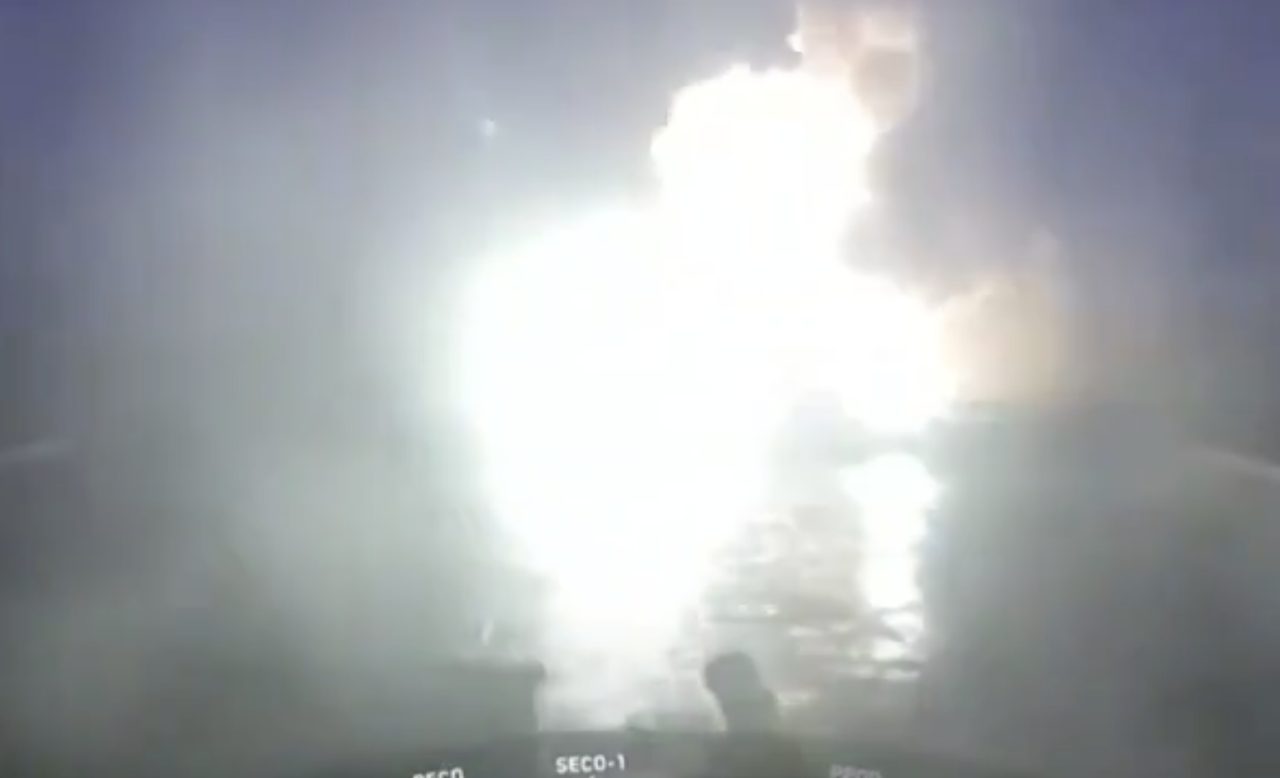
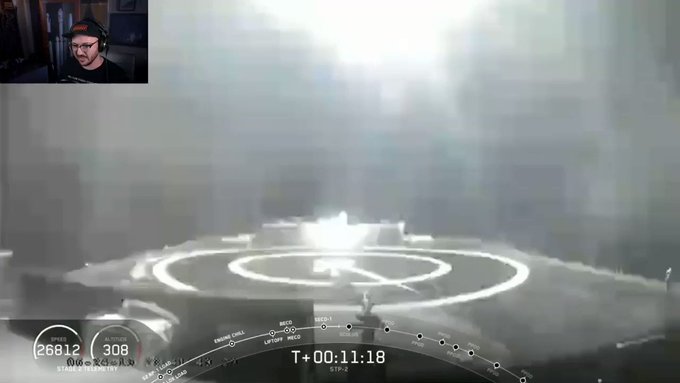
Ma nell'ultima battuta d'arresto, la compagnia fallì in quella che RT descrisse come una missione "audace" per recuperare i razzi dopo il lancio. Dopo che il razzo principale è atterrato con successo su una piattaforma di lancio, il nucleo centrale di richiamo che aveva aiutato a far esplodere il missile, invece di schiantarsi contro il mare in un'esplosione di fuoco.


Falcon Heavy’s side boosters have landed at SpaceX Landing Zones 1 and 2!
1,991 people are talking about this
Il terzo lancio della compagnia Falcon Heavy fu considerato il suo "lancio più difficile di sempre", data la moltitudine di satelliti, schieramenti e "parti mobili" coinvolti. Tutto andava bene, con il pieno dispiegamento del suo carico utile e l'atterraggio sicuro di entrambi i razzi laterali. Ma poi la missione ha colpito un intoppo costoso.
Falcon Heavy Center core curse continues... It looks to me like it full blown took off sideways... which MIGHT mean one of the outer engines could have shut down early and then pitched it over sideways... is that correct @elonmusk ? Next time!!! 🖤
1,031 people are talking about this

Per lo meno, i due booster Falcon Heavy sono atterrati in sicurezza e saranno riutilizzati per la prima volta dopo essere atterrati in sicurezza. Tuttavia, il booster di base non è stato così fortunato. A parte l'esplosione alla fine, la compagnia ha descritto la missione come un successo, visto il lancio di 24 satelliti - tra cui un satellite per test a vela solare; un orologio atomico sullo spazio profondo e un nuovo tipo di propellente verde per la NASA - e il deposito dei resti cremati di 152 persone a bordo nello spazio al costo di $ 5,000 per grammo di cenere. Il programma Apollo supporta l'astronauta Bill Pogue tra i morti le cui ceneri sono state rilasciate nello spazio da Falcon Heavy.
Tradotto automaticamente con Google
Fonte: qui

domenica 11 novembre 2018

The "Nightmare Scenario" For Beijing: 50 Million Chinese Apartments Are Empty

Back in 2017, we explained why the "fate of the world economy is in the hands of China's housing bubble." The answer was simple: for the Chinese population, and growing middle class, to keep spending vibrant and borrowing elevated, it had to feel comfortable and confident that its wealth would keep rising. However, unlike the US where the stock market is the ultimate barometer of the confidence boosting "wealth effect", in China it has always been about housing as three quarters of Chinese household assets are parked in real estate, compared to only 28% in the US, with the remainder invested financial assets.

Source: Xinhua

Beijing knows this, of course, which is why China periodically and consistently reflates its housing bubble, hoping that the popping of the bubble, which happened in late 2011 and again in 2014, will be a controlled, "smooth landing" process.  For now, Beijing has been successful in maintaining price stability at least according to official data, allowing the air out of the "Tier 1" home price bubble which peaked in early 2016, while preserving modest home price appreciation in secondary markets.
How long China will be able to avoid a sharp price decline remains to be seen, but in the meantime another problem faces China's housing market: in addition to being the primary source of household net worth - and therefore stable and growing consumption - it has also been a key driver behind China's economic growth, with infrastructure spending and capital investment long among the biggest components of the country's goalseeked GDP. One result has been China's infamous ghost cities, built only for the sake of Keynesian spending to hit a predetermined GDP number that would make Beijing happy.
Meanwhile, in the process of reflating the latest housing bubble, another dire byproduct of this artificial housing "market" has emerged: tens of millions of apartments and houses standing empty across the country.
According to Bloomberg, soon-to-be-published research will show that roughly 22% of China’s urban housing stock is unoccupied, according to Professor Gan Li, who runs the main nationwide study. That amounts to more than 50 million empty homes.
The reason for the massive empty inventory glut: to keep supply low and prices artificially elevated by taking out as much inventory off the market as possible. This, however, works both ways, and while it helps boost prices on the way up as the economy grow and speculators flood the housing market with easy money, the moment the trend flips the spike in supply as empty units are offloaded will lead to a panic liquidation of homes, resulting in what may be the biggest housing market crash ever observed, and putting the US home bubble of 2006 to shame.
Indeed, as Bloomberg notes, the "nightmare scenario" for Chinese authorities is that owners of unoccupied dwellings rush to sell when cracks start appearing in the property market, causing a self-reinforcing downward price spiral.
Worse, the latest data, from a survey in 2017, also suggests Beijing’s efforts to curb property speculation - which alongside shadow banking and the persistent threat of sudden bank runs (like the one discussed last week) is considered by Beijing a key threat to financial and social stability - have failed.
"There’s no other single country with such a high vacancy rate,” said Gan, of Chengdu’s Southwestern University of Finance and Economics. “Should any crack emerge in the property market, the homes to be offloaded will hit China like a flood.”
How did the Chinese researcher obtain this troubling number? To find the percentage of vacant housing, thousands of researchers spread out across 363 Chinese counties last year as part of the China Household Finance Survey, which Gan runs at the university.
Gan said that the vacancy rate, which excludes homes yet to be sold by developers, was little changed from a 2013 reading of 22.4%. And while that study showed 49 million vacant homes, Gan puts the number now at "definitely more than 50 million units."
Meanwhile, Beijing - which is fully aware of these stats, and is also aware that even a modest price decline could be magnified instantly as millions of "for sale" units hit the market at the same time - is worried. That's why Chinese authorities have imposed buying restrictions and limited credit availability, only to see money flooding into other areas. Rampant price gains also mean millions of people are shut out from the market, exacerbating inequality.
In fact, China's president Xi famously said in October last year that "houses are built to be inhabited, not for speculation", and yet a quarter of China's housing is just that: empty, and only serves to amplify speculation.
While holiday homes and the empty dwellings of migrants seeking work elsewhere account for some of the deserted properties, Gan found that investment purchases have been the biggest factor keeping the vacancy rate high. That’s despite curbs across the country meant to discourage buying of multiple dwellings.
There is another economic cost to this speculative frenzy: the drop in supply puts upward pressure on prices and crowds young buyers out of the market, according to Kaiji Chen, who co-authored a Fed paper called “The Great Housing Boom of China." 
And, as Americans so fondly recall, the result of chasing unaffordable homes for the purpose of price speculation has resulted in yet another unprecedented debt bubble: according to Caixin, outstanding personal home mortgages in China have exploded sevenfold from 3 trillion yuan ($430 billion) in 2008 to 22.9 trillion yuan in 2017, according to PBOC data
By the end of September, the value of outstanding home mortgages had surged another 18% Y/Y to a record 24.9 trillion yuan, resulting in a trend that as Caixin notes, has turned many people into what are called “mortgage slaves."
It has also resulted in yet another housing bubble: home mortgage debt now makes up more than half of total household debt in China. As of the third quarter, it accounted for 53% of the 46.2 trillion yuan in outstanding household debt.
For now, few are losing sleep over what will be the next massive housing bubble to burst. An example of a vacant home is a villa on the outskirts of Shanghai that 27-year-old Natalie Feng’s parents bought for her. The two-story residence was meant to be a weekend escape for the family of three. In reality, it’s empty most of the time, and Feng says it’s too much trouble to rent it out.
"For every weekend we spend there, we need to drive for an hour first, and clean up for half a day," Feng said. She joked that she sometimes wishes her parents hadn’t bought it for her in the first place. That’s because any apartment she buys now would count as a second home, which means she’d have to make a bigger down payment.
* * *
What is troubling is that despite relatively stable home prices, the foundations behind the housing market are cracking. As the WSJ recently reported, in early December, a group of homeowners stormed the sales office of their Shanghai complex, "Central Washington", whose developer, Shanghai Zhaoping Real Estate Development, was advertising new apartments at a fraction of the prices of the ones sold earlier in the year. One apartment owner said the new prices suggested the value of the apartment she bought from the developer in March had dropped by about 17.5%.
“There are people who bought multiple homes who are now trying to sell one to pay off the mortgage on another,” said Ran Yunjie, a property agent. One of his clients bought an apartment last year for about $230,000. To find a buyer now, the client would have to drop the price by 60%, according to Ran.
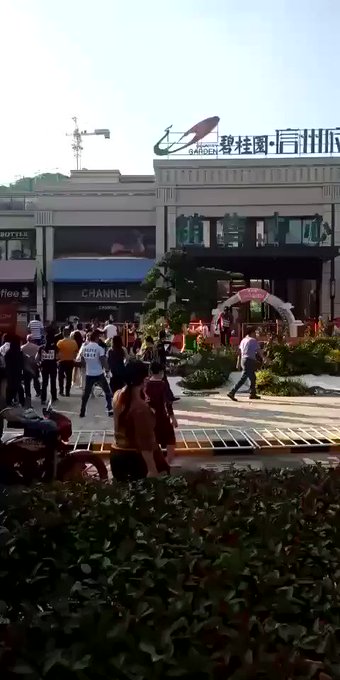
Meanwhile, in a truly concerning demonstration of what will happen when the bubble finally bursts, last month we reported that angry homeowners who paid full price for units at the Xinzhou Mansion residential project in Shangrao attacked the Country Garden sales office in eastern Jiangxi province last week, after finding out it had offered discounts to new buyers of up to 30%.


Country Garden cut the selling price at one of its residential developments by 1/3. Those who paid full price smashed the sales office. Similar incidents had happened before, and will again. It’s impossible to remove “the guarantee of principal”(刚性兑付)in China.

265 people are talking about this
"Property accounts for roughly 70 per cent of urban Chinese families’ total assets – a home is both wealth and status. People don’t want prices to increase too fast, but they don’t want them to fall too quickly either,” said Shao Yu, chief economist at Oriental Securities. "People are so used to rising prices that it never occurred to them that they can fall too. We shouldn’t add to this illusion," Shao added, echoing Ben Bernanke circa 2005.
But the biggest surprise once the music finally stops may be that - as a fascinating WSJ report revealed one year ago - China's housing downturn is likely far, far worse than meets the eye, as under Beijing’s direction more than 200 cities across China for the last three years have been buying surplus apartments from property developers and moving in families from condemned city blocks and nearby villages. China’s Housing Ministry, which is behind the purchases, said it plans to continue the program through 2020. The strategy, supported by central-government bank lending, has rescued housing developers and lifted the property market.
In other words, while China already has a record 50 million empty apartments, the real number - when excluding the government's own stealthy purchases of excess inventory - is likely significantly higher. It is this, and not China's stock market, that has long been the biggest time bomb for Beijing, and if Trump and Peter Navarro truly want to crush China in their ongoing trade war, they should focus on destabilizing the housing market: the Chinese stock market was, and remains just a distraction.
To summarize:
  • China has more than 50 million vacant apartments
  • Mortgage loans have grown 8-fold in the past decade
  • Prices are kept steady thanks to constant government purchases of surplus inventory
  • Home prices are already cracking, with some homebuilders forced to cut prices by 30%.
  • Homebuyers revolt, forming angry militias and storm homesellers' offices when prices dip
For now, China has been able to maintain the illusion of stability to preserve social order. However, should the housing slowdown accelerate significantly and tens of millions in empty units suddenly hit the market, then the "working class insurrection" that China has been preparing for since 2014...

... will become an overnight reality, with dire consequences for the entire world.
Fonte: qui

"A Chinese Recession Is Inevitable" 

Ken Rogoff Ruins 'Decoupled-America' Narrative


Analysts say a Chinese recession would only hurt the region. That may be wishful thinking...
When China finally has its inevitable growth recession – which will almost surely be amplified by a financial crisis, given the economy’s massive leverage – how will the rest of world be affected? With US President Donald Trump’s trade war hitting China just as growth was already slowing, this is no idle question.
Typical estimates, for example those embodied in the International Monetary Fund’s assessments of country risk, suggest an economic slowdown in China will hurt everyone. But the acute pain, according to the IMF, will be more regionally concentrated and confined than would be the case for a deep recession in the United States.
Unfortunately, this might be wishful thinking.
First, the effect on international capital markets could be vastly greater than Chinese capital market linkages would suggest. However jittery global investors may be about prospects for profit growth, a hit to Chinese growth would make things a lot worse. Although it is true that the US is still by far the biggest importer of final consumption goods (a large share of Chinese manufacturing imports are intermediate goods that end up being embodied in exports to the US and Europe), foreign firms nonetheless still enjoy huge profits on sales in China.
Investors today are also concerned about rising interest rates, which not only put a damper on consumption and investment, but also reduce the market value of companies (particularly tech firms) whose valuations depend heavily on profit growth far in the future. A Chinese recession could again make the situation worse.
I appreciate the usual Keynesian thinking that if any economy anywhere slows, this lowers world aggregate demand, and therefore puts downward pressure on global interest rates. But modern thinking is more nuanced. High Asian saving rates over the past two decades have been a significant factor in the low overall level of real (inflation-adjusted) interest rates in both the US and Europe, thanks to the fact that underdeveloped Asian capital markets simply cannot constructively absorb the surplus savings.
Former US Federal Reserve chair Ben Bernanke famously characterised this much-studied phenomenon as a key component of the “global savings glut”. Thus, instead of leading to lower global real interest rates, a Chinese slowdown that spreads across Asia could paradoxically lead to higher interest rates elsewhere – especially if a second Asian financial crisis leads to a sharp draw-down of central bank reserves. Thus, for global capital markets, a Chinese recession could easily prove to be a double whammy.
As bad as a slowdown in exports to China would be for many countries, a significant rise in global interest rates would be much worse. Eurozone leaders, particularly German Chancellor Angela Merkel, get less credit than they deserve for holding together the politically and economically fragile single currency against steep economic and political odds. But their task would have been well-nigh impossible but for the ultra-low global interest rates that have allowed politically paralysed eurozone officials to skirt needed debt write-downs and restructurings in the periphery.
When the advanced countries had their financial crisis a decade ago, emerging markets recovered relatively quickly, thanks to low debt levels and strong commodity prices. Today, however, debt levels have risen significantly, and a sharp rise in global real interest rates would almost certainly extend today’s brewing crises beyond the handful of countries (including Argentina and Turkey) that have already been hit.
Nor is the US immune. For the moment, the US can finance its trillion-dollar deficits at relatively low cost. But the relatively short-term duration of its borrowing – under four years if one integrates the Treasury and Federal Reserve balance sheets – means that a rise in interest rates would soon cause debt service to crowd out needed expenditures in other areas. At the same time, Trump’s trade war also threatens to undermine the US economy’s dynamism. Its somewhat arbitrary and politically driven nature makes it at least as harmful to US growth as the regulations Trump has so proudly eliminated. Those who assumed that Trump’s stance on trade was mostly campaign bluster should be worried.
The good news is that trade negotiations often seem intractable until the 11th hour. The US and China could reach an agreement before Trump’s punitive tariffs go into effect on 1 January. Such an agreement, one hopes, would reflect a maturing of China’s attitude toward intellectual property rights – akin to what occurred in the US during the late 19th century. (In America’s high growth years, US entrepreneurs often thought little of pilfering patented inventions from the United Kingdom.)
A recession in China, amplified by a financial crisis, would constitute the third leg of the debt super-cycle that began in the US in 2008 and moved to Europe in 2010. Up to this point, the Chinese authorities have done a remarkable job in postponing the inevitable slowdown. Unfortunately, when the downturn arrives, the world is likely to discover that China’s economy matters even more than most people thought.
Authored by Kenneth Rogoff, op-ed via The Guardian