“Last night I had a dream. You were in it and I was in it with you….”
— Randy Newman
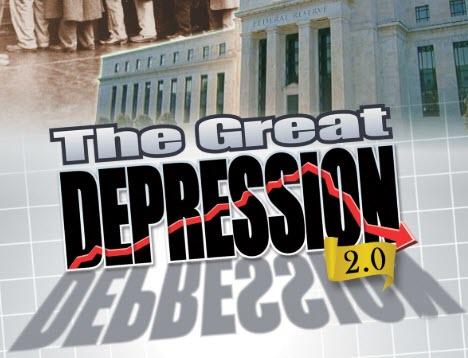
As in this age of Hollywood sequels and prequels, America prefers to recycle old ideas rather than entertain new ones, so you can see exactly how the 2020 presidential election is shaping up to be a replay of the Great Depression, with Roosevelt-to-rescue! — only this time it’ll be with somebody in the role of Eleanor Roosevelt as chief executive. Donald Trump, of course, being the designated bag-holder for all the financial blunders of the past decade, gets to be Herbert Hoover. As was the case in the original, economic depression will segue into war, with maybe not such a happy ending for us as World War Two was.
There should be no doubt that the money part of the story is on a slow boat to oblivion. The world has been running on loans to such a grotesque degree that it’s managed the impressive feat of bankrupting the future. The collateral for all that debt was the conviction that there were ample amounts of future “growth” up ahead to service that debt. That conviction is now evaporating as car sales plummet, and real estate goes south, and nations twang each other over trade, and global supply lines wither. Globalism is unwinding — and not for the first time, either.
As in the standard Hollywood screenplay format, expect an “all is lost” moment when the “hero” (the USA) faces the existential dread of realizing that there is no more borrowing with the collateral gone. Translation: when the Federal Reserve discovers it can’t cue up yet another round of “Quantitative Easing” (QE) and ZIRP without destroying the value of the dollar — which it might do anyway, since monetary inflation is a great benefit to those who can’t pay back their debts, and the USA is the biggest deadbeat of all. An inflationary depression won’t be the same as the deflationary depression of the 1930s, but remember (cliché alert): history doesn’t exactly repeat, it rhymes. Financialization, it’ll turn out, was just money with its value removed. Imagine how pissed off the voters will be.
Note: the growth predicament is hugely misunderstood in this land, because the shale oil “miracle” was such a dazzling stunt. America is now producing above 12 million barrels of oil a day, two million higher than what was thought to be the all-time peak of 10 million a day in 1970. That is extraordinary indeed. We are the world’s leader in oil production now, ahead of Saudi Arabia and the wicked Russian bear. What most Americans don’t know is that this stunning feat was accomplished with hundreds of billions of dollars in borrowed money (debt) that will never be paid back.
The collateral for all that money was the conviction that there was a lot of money to be made in shale oil. But the shale oil industry has had a negative cash flow since it started around 2005. So, we’ve demonstrated that you can produce a lot of something at a big loss for a while, until you can’t. And the moment is approaching when there will be no more loans for the shale oil industry and then, voila, no more shale oil. And the USA will have a whole lot less of its primary energy “input” to the economy. We’ll be back to 2008. The turnaround will be fast and shocking and the American public will feel swindled. And having been already swindled out of all the other comforts and conveniences of what used to be modern life — a job, a home, a car — they will be even more supremely pissed off.
Enter stage left, the first woman president. Take your pick: Kamala Harris, Elizabeth Warren, Kirsten Gillibrand — with AOC as Speaker of the House! The new “Eleanor” will out-do Franklin Roosevelt in “innovative” economic policy. Only this time it won’t be jolly corps of brawny men marching off with pick-axes and shovels to carve trails through the national parks. It will be an orgy of collectivization, led by a gender-fluid army of commissars in an American sequel to the classic film Battleship Potemkin. Madam President will nationalize everything that’s not fastened down with square-head decking screws. Then the show trials will commence, first with the hated One Percenters going to the firing squads and then briskly moving to all the enemies of “intersectional justice.”
None of that will make the USA a better country. And then imagine how pissed off Russia and China will be when Madam President takes up her policy of exporting the New Bolshevism to other lands (because it works so well). Been there, done that, they’ll say. And maybe they’ll have to smack us down to get the point across.
“Reversion to the mean is the iron rule of markets..”
Let’s have a Brexit Free morning.. see how the dust settles, who kills who, and who is left standing on Monday morning..
Two of the most important of Blain’s Trading Mantras are:
“THE MARKET HAS NO MEMORY”
“THE MARKET’S ONLY OBJECTIVE TO INFLICT THE MAXIMUM AMOUNT OF PAIN ON THE MAXIMUM NUMBER OF PARTICIPANTS”
Bearing these in mind, and what’s going on globally, I’m wondering if its time to set up for the big corporate bond buying moment. There is nothing to be fearful about when it comes to volatility. Just be ready for it. For bond markets to be an opportunity… prices have to move dramatically lower. And I think they will as the market wakes up to smell the proverbial coffee.
Long ago, in a galaxy far far away…
There once was a company in far-off Texas that grew and grew its energy and commodities business into a AAA rated behemoth hailed as “American’s Most Innovative Company” year after year. Everyone was happy. They all got massive bonuses right up to the moment Enron went bust on the back of massive accounting fraud, and bond holders were hosed.
17 years later there is another former AAA corporate darling on the cusp of being downgraded to Junk. After reporting $30 bln of unexpected charges and a shortfall in insurance reserves in October, GE’s bond spreads have ballooned as investors start to panic about accounting probes, crashing demand for its products, worries about its $115 bln debt mountain, and the perception of a liquidity meltdown.
Investors are right to be scared. The last few years has seen a bond binge with spreads dramatically tightening on the back of free money. Now its reversing. Investment-grade bond spreads have widened across the board as the bond market wonders who else might be swimming without their bathing suits…
You have to ask what credit analysts do all day…
Nearly half the $6 trillion investment grade bond market is now rated within a single notch of being downgraded to Junk. Not that ratings actually mean that much – another lesson investors seem to have conveniently forgotten just 10-years after they swore they’d never trust ratings again. It’s just too easy to forget they are just expensive opinions.
Over the last 8 years US corporates have gorged on cheap debt – and used it all to buy-back their own stock or payout the Leveraged buyout funds that own them. Debt has risen while profitability has declined. Converting equity into debt to give cash to owners means they haven’t built new plant to make stuff that will repay debt. That multiplies their vulnerability to rising interest rates.
Bond covenants have become progressively softer and less onerous even as US corporates have binged on ultra-low rates selling bonds to investors desperate to buy anything yielding half-a-tad more than Treasuries. (For readers unfamiliar with bond market terms like a tad, smidge or a bit, its dead simple; a tad is bit more than a smidge, or is it smidge is tad less than a bit?)
Once again Ratings lie at the centre of the problem. Fund managers still have rules like “only buy investment grade bonds”, so they do - assuming a rating is the guinea stamp (guarantee) of investment quality, and that attaching a slew of As to a bond somehow justifies buying stuff they just don’t really understand.
Another unintended consequence of QE is yield tourism - investors who were safe in the shallow-risk toddler pond of Government bonds found themselves forced into deeper more dangerous waters of high-risk BBB and Hi-Yield Junk in search of meaningful yields. As the default-sharks gather, the inevitable feeding frenzy is about to start….
Yet another consequences of the crash of 2008 are pages of regulatory overkill and rules that have killed bond market liquidity by constraining banks from doing stuff like making markets or acting as brokers. Markets are dramatically less efficient. Bond markets in the most difficult sectors are trading a massively wider bid/offers and become “distressed” at the first sign of trouble. That’s a long way of saying there will be zero liquidity when fear becomes flight. (And that’s why anyone trying to sell illiquid bonds today is discovering they are a distressed seller!)
(Nor has it helped that banks have seen fit to dismiss most of the experienced sales staff who might have understood underlying value and how to trade difficult debt, and replaced them with young graduates who can just about navigate themselves around the daily sales sheet, but understand nothing about providing liquidity.)
In short, GE’s credit meltdown is coming at just the right time to ruin everyone’s day. Its not as if thing aren’t bad enough already…
When I was a lad, the trip upstate to see the Treasurer of GE was one of the most fearsome of tasks for a young debt origination banker. I’d try to explain demand and the success of the fantastic deals we’d just completed for Ford and GM, and have these dismissed as irrelevant as they had nothing in common with GE. I was unsubtly told If I wanted GE’s debt funding business, I better be prepared to “pay to play” by providing lots of cheap MTN funding before I’d get a public bond mandate from them.
20 years later and GE still has $115bln of outstanding debt. Prices on the benchmark GE 4.4% 2035 bond longer-dated bonds have crashed from near par to near 82% in recent weeks. I imagine I’d get my arm bitten off if I offered them new funding today. Or maybe not.. I read a comment yesterday: “GE does not plan to raise new debt until 2020, so the recent increase in bond yields will not increase current interest expenses.. the company plans to pay down debt through asset sales before returning to bond markets.” Am I convinced? That sounds like a company facing a classic liquidity squeeze. What is Plan B if asset sails don’t work fast enough?
Its spread will likely widen further. Banks and other lenders are buying credit default protection. A few weeks ago, the Commercial Paper market effectively slammed shut to the name. If the rating is further cut to junk, then there will be a wave of enforced bond sales from buyers who can only hold Investment Grade Paper – further widening the pain.
Corporate defaults are a fact of life – a fact many US bond pundits are now waking up to. Recent new deals across the Investment Grade sector have struggled to achieve much market excitement. I can’t help but be amused by bond analysts writing stuff about how attractive bond spreads look at these levels. It feels to me like a crisis is brewing…
Very simple question… why would you buy mega risky high yield debt at 6% when I can sell you absolutely solid secured asset backed alternative debt at 7-8% that’s uncorrelated to the coming debt debacle?
Meanwhile….
Fed Head Jerome Powell is warning the Fed’s rising rate campaign may stall next year on the back of slowing demand overseas, the likelihood of fading fiscal stimulus next year, and the effects of the Fed’s previous hikes now being felt across the economy.
That could mean we’re looking at any big bond correction on credit fundamentals being capped by a slow down in rate rises – the new normal economy of lower growth and constrained inflation?
When bond prices do correct they are going to look very good value if we are into a new normal. Which is why I’m wondering if its time to go bottom fishing on a crash – but in very selective names. 16 Nov 2018
Peter Schiff doesn’t mince words when he declared the precarious state the United States economy has found itself in. As SHTFplan.com's Mac Slavo notes, Schiff says “the truth is we don’t have a booming economy,” and he’s not the only one who has noticed.
October was the worst month for global equities in more than six years. Globally, stock markets lost 7.5%, their worst month since May 2012. Even with the late rally, it was the biggest monthly decline in the Nasdaq since 2008.
“All of the bulls were out in force on the financial networks claiming that the correction is over. Everybody was confident that the lows are in, that the big back-to-back rally is proof and you better buy now, otherwise you’re going to miss the rally, and this is the typical correction and now it has run its course. And you know what? If this really was the end of the correction, most likely there wouldn’t be so many people that were so confident that it’s over. You’d have a lot more fear, especially on Halloween. The fact that there is no fear, to me, shows that it’s more likely that this is not the end of the correction, but the beginning of the bear market and that this rally is a correction.” –Peter Schiff via Seeking Alpha
Schiff is well-known for predicting the 2008 financial crisis, but that becomes slightly more real when hearing him say that the job market if a gigantic bubble. Schiff says that jobs are just one more bubble that’s about to burst.
Two hundred thousand jobs a month in an economy the size of ours, especially given how few people, or what a large percentage of the workforce is not working, we should be creating a lot more than 200,000 jobs per month. But we’re not.”
Even though wages are rising for people that have jobs, the cost of living is rising faster. But the cost of servicing their debt is rising even faster than that.”
As far as the job growth goes, the mainstream keeps pointing to it as a sign of a booming economy. But as Peter pointed out, we’re borrowing a tremendous amount of money to get this jobs growth.
Clearly, if we’re running record budget deficits, and record trade deficits, and everybody is levered up, you know, spending all of that borrowed money creates some jobs. But those jobs are not sustainable because the debt is not sustainable. The consumption based on debt is not sustainable.”
Increasing prices is a direct result of a decade of Federal Reserve easy money policy, Schiff accurately says. Over the last 10 years, the Fed has printed trillions of dollars out of thin air.
The point is we’re running record trade deficits. We’re running huge government budget deficits. The GOP cut income taxes. We’re giving everybody money to spend, so people are spending.
And in the short-run, yes, you can goose up the economy and you can create some unsustainable jobs. But just because we have these jobs today doesn’t mean these jobs are going to be here tomorrow.”
And remember, Schiff concludes: "that every boom has been followed by a bust.”
In what was incredibly appropriate timing given the 'shocktober' market blowup, Bloomberg News invited "Black Swan" author Nassim Taleb to its set on Halloween for a discussion about the increasingly fragile market ecosystem in which we all reside, and the mounting risks that, Taleb believes, could soon ignite another financial crisis that will be even more severe than what we saw in 2008.
Taleb, dressed up as "black swan man", wasted little time in explaining how the global economy is becoming increasingly vulnerable to a global debt crisis, how the global quantitative easing did nothing to fix the underlying problem of too much debt - instead it exacerbated it - and how the inevitable reckoning might play out in markets once the long-dreaded "inflection point" finally arrives.
Taleb began the interview by describing how the global aggregate debt burden has only climbed since the crisis. And while this debt is no longer dangerously concentrated in a single sector, like, say, the housing market, it doesn't change the fact that the overall credit risk in the system has been amplified. And while central banks have for years managed to impose metastability in global markets, as they transition from a period of low interest rates back to "neutral", the destructive forces that they long suppressed will surge back to the surface.
Just like he did in the run-up to the 2008 crash, Taleb isn't trying to forecast the next crash; he's only trying to explain how the global economy has become "more fragile today" than it was in 2007.
"You put novocaine on cancer, and what happens? The patient is going to look better, he's going to feel better, but at some point, you pay a higher price."
And while this debt is distributed in different ways, "you don't get a free lunch." In other words, just because governments and corporate balance sheets have done most of the accumulating, doesn't mean that this debt is 'risk-free'.
"Governments, they think they can borrow for free. But they have had to borrow a lot. We have had to borrow more than $1 trillion dollars...and we're paying some $300 billion in interest.
This has left the US and the rest of the world on the cusp of a dangerous downward spiral.
"You can enter a spiral. In my mind, it's when governments have to borrow more and more to pay interest - like a Madoff scheme."
And once that spiral begins, it's incredibly difficult to arrest the progression.
"The minute you enter that phase, there's nothing healthy about it from an economic standpoint."
Take the US federal government for example. Not only has it accumulated another $10 trillion in debt since the crisis, but it also has "hidden liabilities" on its balance sheet that Taleb believes should be factored in to this total. Social security is one hidden liability. Student debt, which the government will almost certainly need to backstop, is another.
"But we've accumulated an additional $10 trillion in debt since the crisis. Plus we have hidden liabilities that should count as debt - like social security, you have hidden liabilities when you have to bail out firms, you have hidden liabilities from student debt...you have a lot of things, if you've committed to some expenditures, on top of debt you have hidden liabilities that should act like debt."
And while in the past, debt crises have been confined to emerging-market economies like Argentina, today, major developed economies like Italy are already seeing signs of strain as their populist government is hoping to expand the country's budget deficit, adding to what is already the third-largest debt-to-GDP burden in the developed world.
"Years ago we had a debt crisis...in 82' it started in Latin American countries...today it's hitting the core, it's no longer the periphery...look at countries like Italy...but it's getting closer to us."
In the past, the go-to fix for overwhelming debt has been inflation. But the problem with inflation - as the US experienced in the 1970s, is that, once it gets going, it can be almost impossible to control.
"In the past, the normal solution is inflation...but the minute you start to create inflation it's an animal, you can't control it...like we learned in the 1970s...price stability will not be there and traditionally it hasn't been controllable."
It wouldn't take much to trigger a debt crisis in the US. If the Chinese and other 'regular customers' of Treasury debt were to step away from the market, who would take their place?
"The Chinese and the overproducing states were regular customers...maybe they're not going to be there."
Circling back to central banks and their strategy for averting an all-out financial collapse, Taleb pointed out that QE's biggest accomplishment was the transfer of credit risk from individuals to the state. And with interest rates now beginning to rise, somebody is going to need to pay the price for all of this leverage.
"In 2008, we transferred debt from individuals to the states...now ten years later, we're starting to raise rates. We have to raise rates. It's unhealthy to keep rates at zero. So someone is going to have to pay the price.
Though debt isn't as concentrated as it once was, the first signs of stress, according to Taleb, are already beginning to surface in real-estate, where stress that has already appeared in the high end of the market will likely spread (a trend that we have anticipated again and again and again).
"The first shoe to drop will be probably real estate. The higher end real estate has already gone down world wide, people have noticed but they're not talking about it...it will be the higher end real estate first then the rest of the real estate market. One thing that quantitative easing did was increase inequality."
After real estate "the next shoe to drop" will be the stock market..."though what we're seeing today is nothing," Taleb said. Equities cannot maintain their high valuations when interest rates are rising.
"No...what we're seeing today is nothing...but you cannot maintain high valuations in the stock market with higher interest rates."
"With higher interest rates we're going to see some volatility."
While the risks are arrayed against the average investor, there is one "miracle scenario" that could save the US economy from an extremely painful bout of deleveraging. And that would be a combination of torrid real growth with low price instability - essentially a turbocharging of the "goldlilocks" economic conditions that enabled the ever-higher highs during 2017 and 2018.
"What we need, the thing that would save us, miraculously, is real growth without debt...real growth maybe miraculously will take us out...or maybe some type of inflation that maybe wouldn't cause so much price instability...but we've never seen that. Unless we have these two, we're doomed."
While anybody who has expressed concerns about the blowout in the US budget deficit under Trump should find Taleb's arguments compelling, a quick glance at the S&P 500's annualized returns over the past decade might be enough to quash these doubts. After all, why should investors listen to the doomsayers when so many crisis-era superstars, who built their reputations on the rightward bets they made during the runup to the crash, have not only failed to match their returns from 2007 and 2008, but have seen their winnings dissipate entirely in the years since?
Because, as has been demonstrated by at least one fund, the above assumption isn't entirely accurate. Mark Spitznagel, CIO at Universa Investments, which counts Taleb as an advisor, revealed back in September that funds betting on the "end of the world" can, in fact, produce alpha and tack on a few points to a fund's CAGR even during bull markets if the balance of allocations, and the hedging strategies employed, are calibrated in just the right way.
As he revealed in a letter to investors obtained by the WSJ back in September, Spitznagel has managed to outperform the S&P 500 by keeping the bulk of his money invested in a passive benchmark-tracker, while using a tiny sliver of his portfolio (just 3.3%) to buy up out-of-the-money put options when they're looking cheap. This has allowed Spitznagel to book staggering profits during a handful of blowups (like the August 2015 ETF flash crash, where this strategy returned 20% in a single day).
Back in 2017, we explained why the "fate of the world economy is in the hands of China's housing bubble." The answer was simple: for the Chinese population, and growing middle class, to keep spending vibrant and borrowing elevated, it had to feel comfortable and confident that its wealth would keep rising. However, unlike the US where the stock market is the ultimate barometer of the confidence boosting "wealth effect", in China it has always been about housing as three quarters of Chinese household assets are parked in real estate, compared to only 28% in the US, with the remainder invested financial assets.
Source: Xinhua
Beijing knows this, of course, which is why China periodically and consistently reflates its housing bubble, hoping that the popping of the bubble, which happened in late 2011 and again in 2014, will be a controlled, "smooth landing" process. For now, Beijing has been successful in maintaining price stability at least according to official data, allowing the air out of the "Tier 1" home price bubble which peaked in early 2016, while preserving modest home price appreciation in secondary markets.
How long China will be able to avoid a sharp price decline remains to be seen, but in the meantime another problem faces China's housing market: in addition to being the primary source of household net worth - and therefore stable and growing consumption - it has also been a key driver behind China's economic growth, with infrastructure spending and capital investment long among the biggest components of the country's goalseeked GDP. One result has been China's infamous ghost cities, built only for the sake of Keynesian spending to hit a predetermined GDP number that would make Beijing happy.
Meanwhile, in the process of reflating the latest housing bubble, another dire byproduct of this artificial housing "market" has emerged: tens of millions of apartments and houses standing empty across the country.
According to Bloomberg, soon-to-be-published research will show that roughly 22% of China’s urban housing stock is unoccupied, according to Professor Gan Li, who runs the main nationwide study. That amounts to more than 50 million empty homes.
The reason for the massive empty inventory glut: to keep supply low and prices artificially elevated by taking out as much inventory off the market as possible. This, however, works both ways, and while it helps boost prices on the way up as the economy grow and speculators flood the housing market with easy money, the moment the trend flips the spike in supply as empty units are offloaded will lead to a panic liquidation of homes, resulting in what may be the biggest housing market crash ever observed, and putting the US home bubble of 2006 to shame.
Indeed, as Bloomberg notes, the "nightmare scenario" for Chinese authorities is that owners of unoccupied dwellings rush to sell when cracks start appearing in the property market, causing a self-reinforcing downward price spiral.
Worse, the latest data, from a survey in 2017, also suggests Beijing’s efforts to curb property speculation - which alongside shadow banking and the persistent threat of sudden bank runs (like the one discussed last week) is considered by Beijing a key threat to financial and social stability - have failed.
"There’s no other single country with such a high vacancy rate,” said Gan, of Chengdu’s Southwestern University of Finance and Economics. “Should any crack emerge in the property market, the homes to be offloaded will hit China like a flood.”
How did the Chinese researcher obtain this troubling number? To find the percentage of vacant housing, thousands of researchers spread out across 363 Chinese counties last year as part of the China Household Finance Survey, which Gan runs at the university.
Gan said that the vacancy rate, which excludes homes yet to be sold by developers, was little changed from a 2013 reading of 22.4%. And while that study showed 49 million vacant homes, Gan puts the number now at "definitely more than 50 million units."
Meanwhile, Beijing - which is fully aware of these stats, and is also aware that even a modest price decline could be magnified instantly as millions of "for sale" units hit the market at the same time - is worried. That's why Chinese authorities have imposed buying restrictions and limited credit availability, only to see money flooding into other areas. Rampant price gains also mean millions of people are shut out from the market, exacerbating inequality.
In fact, China's president Xi famously said in October last year that "houses are built to be inhabited, not for speculation", and yet a quarter of China's housing is just that: empty, and only serves to amplify speculation.
While holiday homes and the empty dwellings of migrants seeking work elsewhere account for some of the deserted properties, Gan found that investment purchases have been the biggest factor keeping the vacancy rate high. That’s despite curbs across the country meant to discourage buying of multiple dwellings.
There is another economic cost to this speculative frenzy: the drop in supply puts upward pressure on prices and crowds young buyers out of the market, according to Kaiji Chen, who co-authored a Fed paper called “The Great Housing Boom of China."
And, as Americans so fondly recall, the result of chasing unaffordable homes for the purpose of price speculation has resulted in yet another unprecedented debt bubble: according to Caixin, outstanding personal home mortgages in China have exploded sevenfold from 3 trillion yuan ($430 billion) in 2008 to 22.9 trillion yuan in 2017, according to PBOC data
By the end of September, the value of outstanding home mortgages had surged another 18% Y/Y to a record 24.9 trillion yuan, resulting in a trend that as Caixin notes, has turned many people into what are called “mortgage slaves."
It has also resulted in yet another housing bubble: home mortgage debt now makes up more than half of total household debt in China. As of the third quarter, it accounted for 53% of the 46.2 trillion yuan in outstanding household debt.
For now, few are losing sleep over what will be the next massive housing bubble to burst. An example of a vacant home is a villa on the outskirts of Shanghai that 27-year-old Natalie Feng’s parents bought for her. The two-story residence was meant to be a weekend escape for the family of three. In reality, it’s empty most of the time, and Feng says it’s too much trouble to rent it out.
"For every weekend we spend there, we need to drive for an hour first, and clean up for half a day," Feng said. She joked that she sometimes wishes her parents hadn’t bought it for her in the first place. That’s because any apartment she buys now would count as a second home, which means she’d have to make a bigger down payment.
* * *
What is troubling is that despite relatively stable home prices, the foundations behind the housing market are cracking. As the WSJ recently reported, in early December, a group of homeowners stormed the sales office of their Shanghai complex, "Central Washington", whose developer, Shanghai Zhaoping Real Estate Development, was advertising new apartments at a fraction of the prices of the ones sold earlier in the year. One apartment owner said the new prices suggested the value of the apartment she bought from the developer in March had dropped by about 17.5%.
“There are people who bought multiple homes who are now trying to sell one to pay off the mortgage on another,” said Ran Yunjie, a property agent. One of his clients bought an apartment last year for about $230,000. To find a buyer now, the client would have to drop the price by 60%, according to Ran.
Meanwhile, in a truly concerning demonstration of what will happen when the bubble finally bursts, last month we reported that angry homeowners who paid full price for units at the Xinzhou Mansion residential project in Shangrao attacked the Country Garden sales office in eastern Jiangxi province last week, after finding out it had offered discounts to new buyers of up to 30%.
Country Garden cut the selling price at one of its residential developments by 1/3. Those who paid full price smashed the sales office. Similar incidents had happened before, and will again. It’s impossible to remove “the guarantee of principal”(刚性兑付)in China.
"Property accounts for roughly 70 per cent of urban Chinese families’ total assets – a home is both wealth and status. People don’t want prices to increase too fast, but they don’t want them to fall too quickly either,” said Shao Yu, chief economist at Oriental Securities. "People are so used to rising prices that it never occurred to them that they can fall too. We shouldn’t add to this illusion," Shao added, echoing Ben Bernanke circa 2005.
But the biggest surprise once the music finally stops may be that - as a fascinating WSJ report revealed one year ago - China's housing downturn is likely far, far worse than meets the eye, as under Beijing’s direction more than 200 cities across China for the last three years have been buying surplus apartments from property developers and moving in families from condemned city blocks and nearby villages.China’s Housing Ministry, which is behind the purchases, said it plans to continue the program through 2020. The strategy, supported by central-government bank lending, has rescued housing developers and lifted the property market.
In other words, while China already has a record 50 million empty apartments, the real number - when excluding the government's own stealthy purchases of excess inventory - is likely significantly higher. It is this, and not China's stock market, that has long been the biggest time bomb for Beijing, and if Trump and Peter Navarro truly want to crush China in their ongoing trade war, they should focus on destabilizing the housing market: the Chinese stock market was, and remains just a distraction.
To summarize:
China has more than 50 million vacant apartments
Mortgage loans have grown 8-fold in the past decade
Prices are kept steady thanks to constant government purchases of surplus inventory
Home prices are already cracking, with some homebuilders forced to cut prices by 30%.
Homebuyers revolt, forming angry militias and storm homesellers' offices when prices dip
For now, China has been able to maintain the illusion of stability to preserve social order. However, should the housing slowdown accelerate significantly and tens of millions in empty units suddenly hit the market, then the "working class insurrection" that China has been preparing for since 2014...
... will become an overnight reality, with dire consequences for the entire world.
Analysts say a Chinese recession would only hurt the region. That may be wishful thinking...
When China finally has its inevitable growth recession – which will almost surely be amplified by a financial crisis, given the economy’s massive leverage – how will the rest of world be affected? With US President Donald Trump’s trade war hitting China just as growth was already slowing, this is no idle question.
Typical estimates, for example those embodied in the International Monetary Fund’s assessments of country risk, suggest an economic slowdown in China will hurt everyone. But the acute pain, according to the IMF, will be more regionally concentrated and confined than would be the case for a deep recession in the United States.
Unfortunately, this might be wishful thinking.
First, the effect on international capital markets could be vastly greater than Chinese capital market linkages would suggest. However jittery global investors may be about prospects for profit growth, a hit to Chinese growth would make things a lot worse. Although it is true that the US is still by far the biggest importer of final consumption goods (a large share of Chinese manufacturing imports are intermediate goods that end up being embodied in exports to the US and Europe), foreign firms nonetheless still enjoy huge profits on sales in China.
Investors today are also concerned about rising interest rates, which not only put a damper on consumption and investment, but also reduce the market value of companies (particularly tech firms) whose valuations depend heavily on profit growth far in the future. A Chinese recession could again make the situation worse.
I appreciate the usual Keynesian thinking that if any economy anywhere slows, this lowers world aggregate demand, and therefore puts downward pressure on global interest rates. But modern thinking is more nuanced. High Asian saving rates over the past two decades have been a significant factor in the low overall level of real (inflation-adjusted) interest rates in both the US and Europe, thanks to the fact that underdeveloped Asian capital markets simply cannot constructively absorb the surplus savings.
Former US Federal Reserve chair Ben Bernanke famously characterised this much-studied phenomenon as a key component of the “global savings glut”. Thus, instead of leading to lower global real interest rates, a Chinese slowdown that spreads across Asia could paradoxically lead to higher interest rates elsewhere – especially if a second Asian financial crisis leads to a sharp draw-down of central bank reserves. Thus, for global capital markets, a Chinese recession could easily prove to be a double whammy.
As bad as a slowdown in exports to China would be for many countries, a significant rise in global interest rates would be much worse. Eurozone leaders, particularly German Chancellor Angela Merkel, get less credit than they deserve for holding together the politically and economically fragile single currency against steep economic and political odds. But their task would have been well-nigh impossible but for the ultra-low global interest rates that have allowed politically paralysed eurozone officials to skirt needed debt write-downs and restructurings in the periphery.
When the advanced countries had their financial crisis a decade ago, emerging markets recovered relatively quickly, thanks to low debt levels and strong commodity prices. Today, however, debt levels have risen significantly, and a sharp rise in global real interest rates would almost certainly extend today’s brewing crises beyond the handful of countries (including Argentina and Turkey) that have already been hit.
Nor is the US immune. For the moment, the US can finance its trillion-dollar deficits at relatively low cost. But the relatively short-term duration of its borrowing – under four years if one integrates the Treasury and Federal Reserve balance sheets – means that a rise in interest rates would soon cause debt service to crowd out needed expenditures in other areas. At the same time, Trump’s trade war also threatens to undermine the US economy’s dynamism. Its somewhat arbitrary and politically driven nature makes it at least as harmful to US growth as the regulations Trump has so proudly eliminated. Those who assumed that Trump’s stance on trade was mostly campaign bluster should be worried.
The good news is that trade negotiations often seem intractable until the 11th hour. The US and China could reach an agreement before Trump’s punitive tariffs go into effect on 1 January. Such an agreement, one hopes, would reflect a maturing of China’s attitude toward intellectual property rights – akin to what occurred in the US during the late 19th century. (In America’s high growth years, US entrepreneurs often thought little of pilfering patented inventions from the United Kingdom.)
A recession in China, amplified by a financial crisis, would constitute the third leg of the debt super-cycle that began in the US in 2008 and moved to Europe in 2010. Up to this point, the Chinese authorities have done a remarkable job in postponing the inevitable slowdown. Unfortunately, when the downturn arrives, the world is likely to discover that China’s economy matters even more than most people thought.
Authored by Kenneth Rogoff, op-ed via The Guardian