9 dicembre forconi: bond
Visualizzazione post con etichetta bond. Mostra tutti i post

lunedì 26 novembre 2018

JPMorgan Spots The Next Big Problem: A Plunge In Global Bond Demand

One year ago, just as the Fed had started quantitative tightening, i.e., the shrinkage of its balance sheet, JPMorgan's Nikolaos Panigirtzoglou, author of the popular Flows and Liquidity newsletter predicted that the more than $1 trillion decline in G4 central bank bond purchases in 2018 relative to 2017 would be a key driver for the change in the overall supply/demand balance for government bonds, and result in broadly higher yields across the board. And sure enough, with the 10Y rising from 2.33% one year ago to a multi-year high of 3.24% earlier this month, as government bonds around the globe also saw a material pickup in yields, that prediction has been proven accurate.
Where JPM was wrong was in its estimates for matched pickup in non-central bank demand for government paper, where as Panigirtzoglou admits, he was overly optimistic (more on that shortly). 
So with traders - across all asset classes, including equity, credit and rates, all focusing on what happens to US Treasury yields next, the JPMorgan strategist revisits his previous analysis on global bond demand and supply, incorporating updated supply forecasts both for the balance of 2018 as well as for 2019.
"Given this year has seen the largest increase in excess supply of bonds since 2010, which as we noted last week has together with continued Fed hikes contributed to a tightening in financial conditions that has been reverberating across markets, there has been considerable interest in how next year is shaping up."
Attention on 2019 is especially acute as the Fed’s balance sheet normalization process is set to accelerate given that it is only in 4Q18 that the monthly cap for the quantity of maturing bonds that are allowed to roll off has reached its steady state of $50Bn/month, which unlike 2018 when QT was just starting, will induce a further increase in net supply that needs to be absorbed by the market of more than $100bn.
It's not just the Fed: with the ECB set to end its QE purchases in December this year and we see the BoJ continuing its gradual slowdown in bond purchases to ¥30tr in 2019 compared to around ¥40tr this year, JPMorgan notes that this collective shrinkage of the G-4 balance sheet means that the market needs to absorb a further decrease in price-insensitive QE demand of more than $400bn next year.
Here's the bad news: adding together both the supply and demand side impact, the G4 central bank flow looks set to decline a further $550bn next year.
Which begs the question: will there be an incremental increase in demand to offset this dramatic net increase in supply in the coming year? JPMorgan answer is hardly what bond bulls are looking for...
To answer the key question for interest rates in 2019, here is what JPMorgan sees in terms of potential offsetting sources of demand to this continued change in central bank flow, which has clearly put upward pressure on bond yields in 2018.
Commercial Bank Demand.
This is the biggest source of demand disappointment in 2018. According to Panigirtzoglou, he had expected G4 commercial banks to offset some $500bn of the more than $1tr shift in the central bank flow this year. This was based on an estimate that the $7tr of QE purchases by G4 central banks in the prior five years had seen commercial banks accumulate around $3tr less bonds than they would accumulated if QE had not happened. However, the bank's latest estimate of G4 bank bond demand for 2018 suggests they offset only around $200bn of the central bank QE flow shift, "or a multiplier of around 0.2 rather than slightly more than 0.4 we had expected", according to the Flows and Liquidity author.
As the primary reason for this weakness in demand relative to his baseline expectations, the JPM strategist notes the fact that US banks have ceased accumulating excess deposits in 2018 (Figure 2), reducing the need to increase holdings of liquid assets.
Moreover, US banks’ growth in total assets effectively ground to a halt this year for the first time since 2010. Furthermore, US banks appeared to have more than adequate HQLA to absorb some reduction in reserve holdings before needing to accumulate further liquid assets. That said, with front-end Treasuries having cheapened significantly relative to OIS, this has increased their attractiveness for banks to hold as HQLA for regulatory purposes.
Additionally, given the continued decline in the G4 central bank flow, the bank sees G4 commercial banks providing some offset to this decline next year also.
However, given the weakness in this offset this year, we adopt the more modest 0.2x multiplier as a conservative estimate, which  gives us an improvement in commercial bank demand of around $100bn in 2019.
Unfortunately that is not nearly enough to offset the big jump in net supply, which brings us to the second biggest source of potential incremental demand, namely...
Retail bond demand
Here too, and similar to its optimistic commercial bank demand forecast, retail bond demand saw the largest deterioration relative to JPM's expectations for this year. Following on from last year’s more than $800bn of bond demand, JPMorgan had expected a relatively little changed demand backdrop for this year. But following a very strong inflow in January, bond demand after the equity market correction in Jan/Feb has been very modest and is currently tracking a $320bn annualized pace for 2018.  This pace was as weak as 2015 and over the past 10 years only 2011 and 2013 have seen weaker bond demand numbers. Similar to 2016, the bank expects some recovery in 2019 demand from this year’s weakness, but pencil in a relatively conservative improvement in bond demand of around $80bn, or around halfway towards the average annual bond demand over the past decade of around $480bn.
So with the two traditionally largest sources of bond demand - commercial banks and retail investors - set for further disappointment, that brings us to the third potential "Hail Mary" for bond demand in 2019..
Foreign Official Demand
As we discussed in recent weeks, and in keeping with the demand drift for the above two categories, EM reserve growth has weakened in the second half of the year relative to the $230bn annualized pace that IMF data suggested for the first half. Indeed, JPM's estimate of EM FX reserve growth in the second half up to end-October - perhaps in part due to the recent plunge in oil prices which have a direct impact on reciprocal demand for Treasuries in the petrodollar recycling pathway - is for a modest reduction of around $15bn, which brings down the annualized pace of reserve growth to $130bn in 2018 or around $100bn lower than last year.
In addition to the impact of oil prices, this decline in reserves has been driven primarily by China, where the PBoC has likely been intervening to smooth the path of CNY depreciation. Given US-China trade tensions are likely to persist into next year and most analysts expect depreciation pressures on the currency to continue, JPMorgan sees little prospect for a meaningful pickup in bond demand from reserve accumulation to offset the decline in G4 central bank demand and project 2019 bond demand unchanged at $130bn.
Pensions Fund Demand
With 3 of the 4 top demand categories set to disappoint, one potential wildcard is pension fund demand. 
First, as JPM notes, it currently only has data for G4 pension fund demand from the various central banks’ flow of funds publications up to 2Q18, which suggests aggregate demand of at a $700bn annualized pace. This is modestly higher than it had expected at the start of the year and reflects in particular strong demand by US pension funds, where the significant improvement in the funded status of private defined benefit pension funds was driven primarily by increases in the interest rates used to discount future liabilities. Indeed, the yield to worst on the Bloomberg US corporate long Aa index rose by just over 80bp during the year up to end-October, and the Milliman data on the 100 largest defined benefit pension plans showed an improvement in the funded status as a result of a decline in the value of liabilities of more than 7% even as asset returns were also modestly negative at -2% as a result of the October correction.
The improvement in the funded ratios creates an incentive for these pension funds to increase allocations to bonds to lock in this improvement. To Panigirtzoglou, this means that demand from pension funds and insurance companies will remain supportive in 2019, although even here the strategist factors in some modest mean reversion from this year’s $700bn annualized pace to around $600bn next year, which is still above the average annual demand over the past 10 years of around $500bn.
Putting it all together...
Consolidating these different influences on global bond demand, including the decline in net purchases by the BoJ and ECB as well as the modest offsets from other bond investors outlined above, JPMorgan now expects a further significant reduction in bond demand next year of around $350 billion. In fact, as shown in the chart below, summing across the five main sources of bond demand suggests that in 2019 consolidated bond demand will be the lowest it has been since 2008, just as the Fed was set to launch QE, and send both interest rates and yields down to record lows.
Meanwhile, on the bond supply side, JPMorgan expects a modest aggregate increase in both DM government and spread product issuance. For US Treasuries, the bank sees around $160bn of increase in net issuance, including the effect of an expanded fiscal deficit as well as the increase in Fed balance sheet normalisation, while for other DM government bonds it sees a modest decrease driven mainly by a reduction in Euro area government bond issuance. On aggregate, JPM expects net global bond supply to increase by approximately $130 billion.
Putting it all together, the combination of a $350bn deterioration in bond demand and a $130bn increase in bond supply leaves Panigirtzoglou concerned about the net deterioration in the bond supply/demand balance of around $480bn in 2019, compared to around $830bn this year.
Some final cautionary observations:
We note that the 2018 deterioration in the balance between bond demand and supply shown in Figure 9 is much higher compared to our projections from a year ago, as at the time we had overestimated the demand of not only retail investors, which was our biggest forecast error, but also of FX reserve managers and commercial banks.
Summing it all up, the largest US bank warns that "the continued deterioration in the bond supply/demand balance we expect for next year looks set to put further upside pressure on yields in 2019."
And since it was the gradual at first, then suddenly sharp spike in US yields that catalyzed the stock market slump in October, that has since affected November returns as well, traders will be especially focused on JPMorgan's assessment for 2019's net demand shortfall, because if accurate it would suggest that the only way demand will emerge is if yield reprice materially higher, together with all the adverse side effects for all other risk products.
Fonte: qui

martedì 13 novembre 2018

SI AGGRAVA LA CRISI DI CARIGE: AL RAFFORZAMENTO PATRIMONIALE SOLLECITATO DA LUGLIO DALLA BCE, NEGLI ULTIMI GIORNI SI E’ AGGIUNTA CARENZA DI LIQUIDITÀ


SERVONO IN TEMPI BREVI CIRCA 400 MILIONI, E NON RIUSCENDO I SOCI FORTI FARVI FRONTE PER INTERO, BANKITALIA HA LANCIATO NUOVAMENTE UNA CHIAMATA ALLE ARMI ALL' INTERO CETO BANCARIO PER UN SALVATAGGIO DI SISTEMA…

Rosario Dimito per “il Messaggero”
CARIGECARIGE

Stato di allerta massima a Genova ma non per il pericolo nubifragi. La crisi di Carige si sta aggravando. Oltre al rafforzamento patrimoniale sollecitato da luglio dalla Bce, negli ultimi giorni si sarebbe aggiunta una carenza di liquidità. Conseguenza anche dello spread a quota 300.

Servono in tempi brevi circa 400 milioni, e non riuscendo i soci forti farvi fronte per intero, Bankitalia ha lanciato nuovamente una chiamata alle armi all' intero ceto bancario per un salvataggio di sistema fai-da-te attraverso lo Schema Volontario, il braccio del Fondo Interbancario partecipato da tutti gli istituti.

gabriele volpi1GABRIELE VOLPI1
Un modo anche di evitare l'intervento del governo con piani anti-spread non meglio definiti. Oggi alle 12 si riunisce a Roma il Consiglio del Volontario presieduto da Salvatore Maccarone. Ma il via libera alla ciambella da 400 milioni, come cintura di sicurezza rispetto all' apporto degli azionisti, è tutt' altro che scontato. Il Volontario potrebbe partecipare a condizione che i soci forti di Carige Malacalza, Volpi, Mincione, Spinelli facciano la loro parte sottoscrivendo un bond subordinato: ma Malacalza che pure era disponibile, nelle ultime ore, si sarebbe irrigidito per l'attendismo di Gabriele Volpi e a cascata di Raffaele Mincione.

Il board dello Schema Volontario si terrà in parallelo al cda della banca ligure che, oltre ad approvare i conti a settembre, dovrebbe lanciare il prestito subordinato ordinato dalla Bce a luglio scorso all' interno del «capital plan» entro il 30 novembre con possibilità di collocare il prestito entro fine dicembre in modo da osservare i requisiti patrimoniali. Ma la situazione di Carige è delicatissima e ieri ci sarebbe stata una riunione straordinaria del cda che ha smaltito i dossier ordinari per consentire al consiglio di oggi di discutere dei conti e del rafforzamento.
raffaele mincioneRAFFAELE MINCIONE

L'AUMENTO DI CAPITALE
Tra le opzioni oltre al bond, ci sarebbe il lancio di un aumento di capitale. Lo Schema Volontario, come recita lo statuto, può intervenire, secondo le regole del Testo unico bancario, in caso di dissesto e dopo che sono state esplorate soluzioni come la riduzione/conversione di strumenti di capitale di classe 1.

Inoltre le delibere richiedono una maggioranza qualificata del 90% dei depositi protetti dal Fondo e del 50% del numero di banche aderenti. Un percorso ad ostacoli che rende proibitivo il traguardo. Il presidente Pietro Modiano è in stretto contatto con la Bce, e anche ieri c' è stato un confronto.

vittorio malacalzaVITTORIO MALACALZA
L' intera manovra è quindi fortemente in dubbio: Francoforte ha chiesto entro fine novembre gli impegni dei sottoscrittori del bond. Moltissime banche, a partire da Intesa Sanpaolo e Unicredit che, per le dimensioni sono quelle chiamate a un contributo maggiore, nicchiano. Carlo Messina da maggio 2017, ha espresso contrarietà ad altre contribuzioni straordinarie che, aggiunte a quelle ordinarie, sono costate finora 11,9 miliardi.

In questi giorni sul tavolo degli istituti c' è un' operazione di finanziamento di 2,75 miliardi da erogare a favore del Fondo Interbancario, da cui a Natale del 2015 nacque lo Schema Volontario. Servirà di riserva per intervenire a tutela dei depositi fino a 100 mila euro, in caso di liquidazione di un istituto. Non è il caso di Carige che nonostante tutto, è ancora in bonis, sia pure a rischio dissesto.
vittorio malacalzaVITTORIO MALACALZA

Via Nazionale è in pressing sulle banche aderenti allo Schema Volontario. In campo, per scongiurare il default di Carige, c' è il governatore Ignazio Visco assieme alla sua squadra. Il timore è l' effetto contagio. I vertici di Bankitalia contano di sensibilizzare le banche su questo terreno. Ma non sarà semplice perché gli eventuali nuovi oneri andrebbero a pesare sui bilanci 2018 che devono già sopportare le conseguenze dello spread.

12 Novembre 2018

Fonte: qui

venerdì 19 ottobre 2018

''ECCO COME LAVORANO LE AGENZIE DI RATING QUANDO DEVONO DARE UN GIUDIZIO A UNA BANCA ....''


''MANDANO UN PAIO DI ANALISTI GIOVANISSIMI. CONVENEVOLI E PRANZO NEL RISTORANTE PIÙ COSTOSO. POI, LA FATIDICA DOMANDA: 'CI DATE L'ULTIMO RAPPORTO ISPETTIVO DI BANKITALIA?' 

E SU QUELLO SCRIVEVANO IL REPORT. 

FINE. 

ORA SCOPIAZZERANNO IL LORO 'GIUDIZIO' DALLA LETTERINA INVIATA DA MOSCOVICI AL GOVERNO. E PENSARE CHE DRAGHI...'' (FABIO DRAGONI)


MA NON CI SONO SOLO I SOVRANISTI: LEGGETE L'EDITORIALE DURISSIMO DEL VICEDIRETTORE DEL ''SOLE'' SUI PATTEGGIAMENTI DEL ''CLAN DEL RATING'' E I LORO GIUDIZI FARLOCCHI


Fabio Dragoni, imprenditore e manager, su Twitter
Ora vi racconto come ragionano le agenzie di rating. Anche se in parte lo sapete già. Ma lo faccio portandovi la mia esperienza. Fra il 1999 ed il 2010 ho infatti svolto l’attività di rating advisor
agenzie di rating le proprietaAGENZIE DI RATING LE PROPRIETA'
Il Rating Advisor in pratica assiste il cliente ( nel mio caso quasi sempre una banca) che chiede e quindi desidera avere un rating.
Il desiderio di avere un rating è giustificato dal fatto che il giudizio di un’agenzia (soprattutto se lusinghiero) apriva alle banche (specie le più piccole) la possibilità di piazzare obbligazioni presso investitori istituzionali o esteri altrimenti irraggiungibili.
Questo fino al 2009-2010. Da allora il mercato dei capitali si è nel settore dei private placement molto ridimensionato. E per le banche esisteva un canale di finanziamento molto più comodo con tanti saluti al mercato e al rating. La BCE coi suoi rifinanziamenti.
Ma torniamo a noi. I clienti volevano il rating. Quel giudizio era una vetrina. Non avevi bisogno di presentarti o “improfumarti” più di tanto. Il rating parlava per te. E tu potevi arrivare ad investitori irraggiungibili purché avessi un giudizio superiore almeno a BBB-.

rating jpegRATING
Le agenzie di rating -che come giustamente dice @Rinaldi_euro è improprio chiamarle tali perché l’appellativo le fa apparire organismi sovranazionali mentre invece sono società pagate da chi riceve il giudizio- arrivavano alla visita con 2-3 giovanissimi analisti
Molta scena tanto convenevoli. Solite check list. Dopodiché a pranzo nel ristorante migliore. Ma il momento topico della visita in cui veniva deciso il giudizio era uno ed uno solo. Anche se loro non potevano ammetterlo. Pena banalizzare il loro intervento
L’agenzia di rating chiedeva: “fateci vedere l’ultimo verbale relativo al rapporto ispettivo di #Bankitalia. Non preoccupatevi. Siamo uomini di mondo. Conosciamo i toni che usa. Non ci faremo influenzare”

agenzie di rating le proprietaAGENZIE DI RATING LE PROPRIETA'
Dovete infatti sapere che una banca viene ispezionata da capo a piedi da #Bankitalia almeno una volta ogni 3-4 anni ammesso che tu non abbia problemi. Nel qual caso ritorna almeno una volta ogni 12-18 mesi.
#Bankitalia rovescia la banca come un calzino. Occupa gli mesi e mesi con gli ispettori che vengono da lontano (per evitare connivenze) e che incassano gustosi rimborsi spese. Apre la corrispondenza. I cassetti etc...
L’ispezione termina col duello rusticano sulle valutazioni dei crediti. Più alte sono le svalutazioni rispetto al bilancio maggiori le perdite inattese.
ratingRATING
Gli ispettori se ne vanno e tornano dopo poche settimane col rapporto ispettivo. Toni molto duri anche se l’ispezione è andata bene. La lunghezza ti faceva capire tutto. Pochi rilievi (una pagina e mezzo) eccellente. 3-4 pagine insomma. Oltre 5 qualche problemino.
agenzie ratingAGENZIE RATING
Le sanzioni agli amministratori (come ben sa chi ha fatto l’amministratore ad esempio @borghi_claudio) sono all’ordine del giorno
Bene torniamo a noi. Gli analisti dell’agenzia si prendono copia del rapporto et voilà il gioco è fatto. Useranno quelle valutazioni le riscriveranno a modo loro con un meccanismo di conversione/traduzione che ero arrivato a padroneggiare ed il rating quello era in pratica se gli mandavamo il rapporto per email ci risparmiavamo tempo e costo del pranzo. Ecco ora che sapete come funzionano le agenzie immaginatevi quello che faranno con questa lettera quando dovranno confermare o meno il rating all’Italia.
MOODYS RATINGMOODYS RATING
L’impatto delle agenzie nella vita degli investitori è enorme. Un voto in meno rispetto a BBB- e tantissimi investitori istituzionali per regolamento interno non possono investire in obbligazioni con rating più basso alla BBB-
Le stesse banche centrali uniformano i propri criteri di valutazione al fatto che i soggetti vigilati acquistino o meno asset con valutazioni superiori o inferiori alla BBB- (soglia minima di investment grade)
LETTERA DI DOMBROVSKIS E MOSCOVICI SULLA MANOVRALETTERA DI DOMBROVSKIS E MOSCOVICI SULLA MANOVRA
Non sto a spiegarvi che quando ho iniziato a fare questo lavoro l’Italia aveva AA (due gradini sotto il massimo dei voti) e ci scandalizzavamo che non avesse il massimo AAA
Vi era poi una regola esplicita che gli analisti non scritta. Nessun cliente (per quanto figo fosse) poteva avere un rating superiore al rating sovrano (SOVRANO) di riferimento. Cioè GENERALI poteva pure avere numeri da AAA ma non poteva valere più dell’Italia
Oggi Generali ha una A- e su altri BBB+ con l’Italia che da BBB verrà retrocessa a BBB- grazie a questa lettera
Dimenticavo. All’inizio del suo mandato Draghi aveva provato a ridimensionare il ruolo delle agenzie di rating senza riuscirci. Del resto sul tema era stato chiarissimo
DRAGHI CONTRO LE AGENZIE DI RATINGDRAGHI CONTRO LE AGENZIE DI RATING
Spero che questi miei tweet vi aiutino a capire meglio. Grazie


BOND, IL CLAN DEI RATING COLPISCE ANCORA: TITOLI TOSSICI CLASSIFICATI TRIPLA A
Alessandro Plateroti per ''Il Sole 24 Ore''
Domanda da un miliardo e mezzo di dollari: è possibile dare un rating senza accorgersi che il bond è di una mucca e non di un banchiere? È quanto si è chiesta la Sec dopo la scoperta nei server di Standard & Poor’s di un messaggio un po’ strano: «I nostri modelli di analisi non riescono a catturare la metà dei rischi di un derivato sui mutui: se ci chiedessero di valutare un bond strutturato da una mucca, daremmo un rating anche a quello».
Ecco com’è finita: dopo tre anni di infruttuosa battaglia giudiziaria, quel messaggio ha convinto il colosso dei rating a chiudere in gran fretta e con un patteggiamento record da 1,3 miliardi di dollari l’inchiesta federale sulle manipolazioni dei rating nella crisi dei mutui. E questo, dopo aver già patteggiato poco prima un’altra sanzione da 150 milioni di dollari per chiudere un altro filone di inchiesta sulle “valutazioni allegre” dei derivati immobiliari.
Guan Jianzhong presidente DagongGUAN JIANZHONG PRESIDENTE DAGONG
In totale, dopo aver rifiutato qualunque ipotesi di accordo per oltre tre anni, la prima agenzia di rating del mondo ha saldato quindi con un assegno da un miliardo e mezzo di dollari buona parte delle battaglie legali sul decennio degli scandali e non solo negli Stati Uniti. In India, per esempio, il governo è stato appena costretto a nazionalizzare la IF&LS (si veda articolo in basso), una «banca ombra» che le agenzie di rating consideravano «tripla A», cioè il massimo della sicurezza: in realtà, annaspava tra i debiti da più di un anno.
Solo il 7 agosto, quando il default è diventato chiaro a tutti, l’agenzia di rating Icra l’ha declassata a doppia A, appena al di sotto del voto più alto della scala. A fine ottobre, la bancarotta è stata ufficializzata, ma il rating non era cambiato. Casi analoghi in Cina e in Russia: alla Dagong, la più grande agenzia di rating cinese, è stato vietato dal governo di prendere nuovi clienti per almeno un anno, oltre al divieto di emettere valutazioni sui derivati fino a nuovo ordine.
dagong RATINGDAGONG RATING
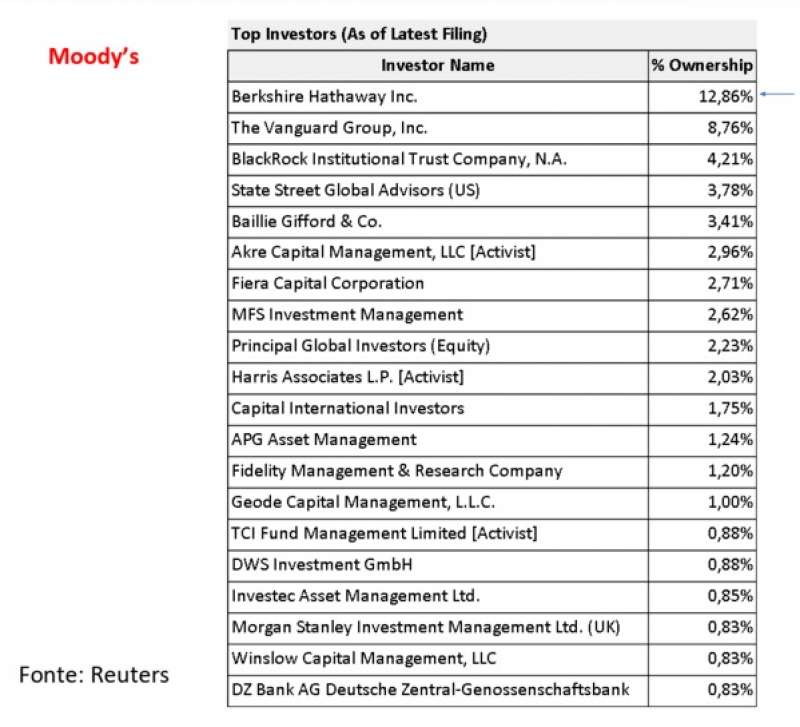
E solo lunedì 15 ottobre, è scoppiato il caso della Xinjiang Production and Construction Corps, una banca ombra cinese arrivata al con un rating (da poco tagliato) doppia A dell’agenzia Shanghai Brilliance Credit Rating & Investors Service Co: anche in questo caso sono scattate le contromisure del governo. E questi sono due esempi tra i tanti. Dall’America all’Europa, dalla Russia alla Cina, una miriade di sanzioni, risarcimenti e nuove inchieste hanno riportato alla luce gli stessi problemi di dieci anni fa: governance inconsistente, controlli interni inadeguati, conflitti di interesse e modelli di analisi dei derivati di cui nessuno riesce a capire logica e funzionamento. Compreso chi fa i rating: come Moody’s, per esempio.
FITCHFITCH
La seconda agenzia del mondo per quota di mercato è stata costretta a patteggiare 60 giorni fa una multa di oltre 15 milioni di dollari per violazioni sulle procedure di calcolo che applica regolarmente su alcune classi di bond: in 54 casi non è neppure riuscita a spiegare per quale motivo i rating assegnati fossero materialmente diversi dai risultati impliciti previsti dai modelli di valutazione utilizzati per i derivati. Se si pensa che solo in Europa circolano derivati che hanno un valore nozionale di oltre 660mila miliardi di euro, il problema non è di poco conto.
E tenerlo presente è importante anche in vista del probabile scontro in arrivo tra il governo italiano e le agenzie di rating: Moody’s deciderà infatti entro il 26 ottobre se declassare il debito sovrano, aprendo la strada alle altre due grandi concorrenti. Anche per questa ragione - e non certo per vendetta - Il Sole 24 Ore ha messo sotto osservazione il divario tra gli impegni presi formalmente dalle «Big Three» nei loro patteggiamenti con la realtà dei fatti e l’opinione del mercato. Il risultato è preoccupante.
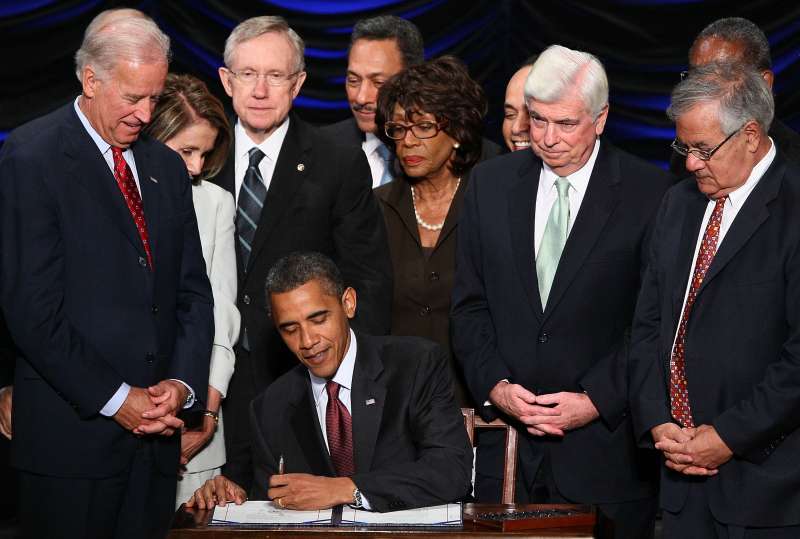
Obama firma legge Dodd FrankOBAMA FIRMA LEGGE DODD FRANK
Riforme e risultati
Sulla carta, gli Stati Uniti hanno risposto nel 2010 all’ondata di scandali con la legge «Dodd–Frank Wall Street Reform and Consumer Protection Act», mentre l’Europa ha affidato nel 2011 all’Esma, l’Autorità europea degli strumenti finanziari e dei mercati, la vigilanza e la stretta regolatoria contro gli abusi delle agenzie di rating. Ebbene,i cambiamenti su cui si puntava di più - come l’apertura a nuove agenzie, l’introduzione di nuovi strumenti di vigilanza, la trasparenza sulle metodologie d’analisi e il potenziamento dei controlli interni - non sono mai arrivati.
Le Big Three continuano a spartirsi il 95% del mercato mondiale e un solo concorrente, Dbrs, sfiora a malapena il 2%: gli altri operatori hanno quote di mercato inferiori all’1%. Nel caso dell’Europa a difendere l’oligopolio sono le stesse regole pensate per romperlo: i requisiti imposti dall’Esma per ottenere la licenza di agenzia riconosciuta sono talmente elevati e costosi da scoraggiare nuovi ingressi sul mercato.
Ma è davanti alla giustizia che il «Clan dei rating» sembra davvero intoccabile: mentre le prime dieci banche internazionali hanno pagato multe che viaggiano oltre i 400 miliardi di dollari, le sanzioni contro le agenzie di rating superano di poco i due miliardi . Non solo. I patteggiamenti più importanti sono stati inspiegabilmente secretati nella primavera del 2013, quando Moody’s e Standard & Poor’s chiusero con dei settlement due grandi cause che si trascinavano dal 2008.
STANDARD AND POOR'SSTANDARD AND POOR'S
In quei dossier, si dice, ci sarebbero tutti gli elementi per far luce sulle manipolazioni dei rating e sull’intero sistema di complicità alla base dello scandalo: il giudice archiviò le denunce con la clausola del «prejudice», una formula che impedisce a chiunque di riavviare cause basate sulle stesse ipotesi di reato. Non è un caso, insomma, se dieci anni di inchieste abbiano all’attivo solo cinque patteggiamenti e pochi spiccioli in risarcimenti. Ecco come e perché.
Differenza tra rating e opinioni
Da quarant’anni, i rating diffusi pubblicamente godono della protezione del Primo Emendamento della Costituzione americana, perché equiparati alle opinioni o ai normali pareri. Così, grazie allo scudo della libertà di espressione, le agenzie si sono sottratte da ogni responsabilità civile per i loro errori, tranne che per le frodi. Per rivalersi delle perdite subite a causa dei rating sbagliati, gli investitori sono costretti a provare l’esistenza di comportamento doloso, o come si dice in inglese «malevolo»,dimostrando che l’agenzia era consapevole dell’inattendibilità dei rating.
STANDARD POORSTANDARD POOR
Con la riforma Dodd Frank la situazione sarebbe dovuta cambiare radicalmente. La legge prevedeva infatti in modo esplicito che i rating non sono opinioni e che quindi, in caso di errore serio, gli investitori danneggiati hanno il diritto di ricorrere al giudice contro le agenzie come avviene per tutti gli intermediari finanziari. La reazione è stata violenta: all’abrogazione del privilegio (la cosiddetta Rule 436) le agenzie hanno risposto rifiutandosi di emettere rating per alcuni nuovi prodotti finanziari, potenzialmente soffocando l’accesso del sistema alle fonti di valutazione del merito creditizio.
Invece di punirle, la Sec ha fatto il contrario: in una lettera di non intervento ha intimato alle procure federali e statali di non avviare azioni legali contro le agenzie se i prodotti finanziari richiedono obbligatoriamente un rating. L’ingiunzione sarebbe dovuta scadere il 24 gennaio 2011, ma è stata poi prorogata indefinitamente, ristabilendo lo scudo normativo. Se non cambia il sistema, ci sarà sempre il rischio che qualcuno confonda mucche e banchieri.
Fonte: qui
RATING TRIPLA A STANDARD E POORRATING TRIPLA A STANDARD E POOR

mercoledì 17 ottobre 2018

A Global People’s Bailout for the Coming Financial Crash

When the global financial crisis resurfaces, we the people will have to fill the vacuum in political leadership. It will call for a monumental mobilisation of citizens from below, focused on a single and unifying demand for a people’s bailout across the world.
***
A full decade since the great crash of 2008, many progressive thinkers have recently reflected on the consequences of that fateful day when the investment bank Lehman Brothers collapsed, foreshadowing the worst international financial crisis of the post-war period. What seems obvious to everyone is that lessons have not been learnt, the financial sector is now larger and more dominant than ever, and an even greater crisis is set to happen anytime soon. But the real question is when it strikes, what are the chances of achieving a bailout for ordinary people and the planet this time?
In the aftermath of the last global financial meltdown, there was a constant stream of analysis about its proximate causes. This centred on the bursting of the US housing bubble, fuelled in large part by reckless sub-prime lending and an under-regulated shadow banking system. Media commentaries fixated on the implosion of collateralised debt obligations, credit default swaps and other financial innovations—all evidence of the speculative greed and lax government oversight which led to the housing and credit booms.
The term ‘financialisation’ has become a buzzword to explain the factors which precipitated these events, referring to the vastly expanded role of financial markets in the operation of domestic and global economies. It is not only about the growth of big banks and hedge funds, but the radical transformation of our entire society that has taken place as a result of the increasing dominance of the financial sector with its short-termist, profitmaking logic.
The origins of the crisis are rooted in the early 1970s, when the US government decided to end the fixed convertibility of dollars into gold, formally ending the Bretton Woods monetary system. It marked the beginning of a new regime of floating exchange rates, free trade in goods and the free movement of capital across borders. The sweeping reforms brought in under the Thatcher and Reagan governments accelerated a wave of deregulation and privatisation, with minimum protective barriers against the ‘self-regulating market’.
The agenda was pushed aggressively by most national governments in the Global North, while being imposed on many Southern countries through the International Monetary Fund and World Bank’s infamous ‘structural adjustment programmes’. A legion of books have examined the disastrous consequences of this market-led approach to monetary and fiscal policy, derisorily labelled the neoliberal Washington Consensus. As governments increasingly focused on maintaining low inflation and removing regulations on capital and corporations, the world of finance boomed—and the foundations were laid for a dramatic dénouement in 2008.
Missed opportunities
What’s extraordinary to recall about the immediate aftermath of the great crash is the temporary reversal of those policies that had dominated the previous two decades. At the G20 summit in April 2009 hosted by British Prime Minister Gordon Brown, heads of state envisaged a return to Keynesian macroeconomic prescriptions, including a large-scale fiscal stimulus in both developed and developing countries. It appeared that the Washington Consensus had suddenly lost all legitimacy. The liberalised global financial system had clearly failed to provide for a net transfer of resources to the developing world, or prevent instability and recurrent crisis without effective state regulation and democratic public oversight.
Many civil society organisations saw the moment to call for fundamental reform of the Bretton Woods institutions, as well as a complete rethink of the role of the state in the economy. There was even talk of negotiating a new Bretton Woods agreement that re-regulates international capital flows, and supports policy diversity and multilateralism as a core principle (in direct contrast to the IMF’s discredited  approach).
The United Nations played a staunch role in upholding such demands, particularly through a commission set up by the then-President of the UN General Assembly, Miguel d’Escoto Brockmann.Led by Nobel laureate Joseph Stiglitz, the ‘UN Conference on the World Financial and Economic Crisis and its Impact on Development’ proposed a number of sensible measures to protect the least privileged citizens from the effects of the crisis, while giving developing countries greater influence in reforming the global economy.
Around the same time, the UN Secretary-General endorsed a Global Green New Deal that could stimulate an economic recovery, combat poverty and avert dangerous climate change simultaneously. It envisioned a massive programme of direct public investments and other internationally-coordinated interventions, arguing that the time had come to transform the global economy for the greater benefit of people everywhere, including the millions living in poverty in developing and emerging industrial economies.
This wasn’t the first time that nations were called upon to enact a full-scale reordering of global priorities in response to financial turmoil. At the onset of the ‘third world’ debt crisis in 1980, an Independent Commission on International Development Issuesconvened by the former West German Chancellor, Willy Brandt, also proposed far-reaching emergency measures to reform the global economic system and effectively bail out the world’s poor.
Yet the Brandt Commission proposals were widely ignored by Western governments at the time, which marked the rise of the neoliberal counterrevolution in macroeconomic policy—and all the conditions that led to financial breakdown three decades later. Then once again, governments responded in precisely the opposite direction for bringing about a sustainable economic recovery based on principles of equity, justice, sharing and human rights.
A world falling apart
We are all familiar with the course of action taken from 2008-9: colossal bank bailouts enacted (without public consultation) that favoured creditors, not debtors, despite using taxpayer money. Quantitative easing (QE) programmes that have pumped trillions of dollars into the global financial system, unleashing a fresh wave of speculative investment and further widening income and wealth gaps. And the perceived blame for the crisis deflected towards excessive public spending, leading to fiscal austerity measures being rolled out across most countries—a ‘decade of adjustment’ that is projected to affect nearly 80 percent of the global population by 2020.
Source: eyewashdesgin: A. Golden, flickr creative commons
To be sure, the ensuing policy responses across Europe were often compared to structural adjustment programmes imposed on developing countries in the 1980s and 1990s, when repayments to creditors of commercial banks similarly took precedence over measures to ensure social and economic recovery. The same pattern has repeated in every crisis-hit region, where the poorest in society pay the price through extreme austerity and the privatisation of public assets and services, despite being the least to blame for causing the crisis in the first place.
After ten years of these policies a new billionaire is created every second day, banks are still paying out billions of dollars in bonuses each year, and the top 1% of the world population are far wealthier than before the crisis happened. At the same time, global income inequality has returned to 1820 levels, and indicators suggest progress is now reversing on the prevention of extreme poverty and multiple forms of malnutrition.
Indeed the United Nations continues to face the worst humanitarian situation since the second world war, in large part due to conflict-driven crises that are rooted in the economic fallout of the 2008 crash—most dramatically in Syria, Libya, and Yemen. Countries of both the Global North and South remain in the grip of a record upsurge of forced human displacement, to which governments are predictably failing to respond to in the direction of cooperative burden sharing through agreements and institutions at the international level.
Not to mention the rise of fascism and divisive populism that is escalating in almost every society, often as a misguided response to pervasive inequality and a widespread sense of unfairness among ordinary workers. It is surely reasonable to suggest that all these trends would not be deteriorating if the community of nations had seized the opportunity a decade ago, and acted in accordance with calls for a just transition to a more equitable world order.
The worst is yet to come
We now live in a strange era of political limbo. Neoclassical economics may have failed to predict the great crash or provide answers for a sustained recovery, yet it still retains its hold on conventional academic thought. Neoliberalism may also be discredited as the dominant political and economic paradigm, yet mainstream institutions like the IMF and OECD still embrace the fundamentals of free market orthodoxy and countenance no meaningful alternative. Consequently, the new regulatory initiatives agreed at the global level are largely voluntary and inadequate, and governments have done little to counter the power of oligopolistic banks or prevent reckless speculative behaviour.
Banks may be relatively safer and possess a bigger crisis toolkit, but the risk has moved to the largely unregulated shadow banking system which has massively increased in size, growing from $28 trillion in 2010 to $45 trillion in 2018. Even major banks like JP Morgan are forewarning an imminent crisis, which may be caused by a digital ‘flash crash’ in which high frequency investments (measuring trades in millionths of a second) lead to a sudden downfall of global stock markets.
Another probable cause is the precipitous rise in global debt, which has soared from $142 to $250 trillion since 2008, three times the combined income of every nation. Global markets are running on easy money and credit, leading to a debt build-up which economists from across the political spectrum agree cannot last indefinitely without catastrophic results. The problem is most acute in emerging and developing economies, where short-term capital flowed in response to low interest rates and QE policies in the West. As the US and other rich countries begin to steadily raise interest rates again, there is a risk of a mass exodus of capital from emerging markets that could trigger a renewed debt crisis in the world’s poorest countries.
Of most concern is China, however, whose credit-fuelled expansion in the post-crash years has led to massive over-investment and national debt. With an overheating real-estate sector, volatile stock market and uncontrolled shadow banking system, it is a prime candidate to be the site for the next financial implosion.
However it originates, all the evidence suggests that an economic collapse could be far worse this time around. The ‘too-big-to-fail’ problem remains critical, with the biggest US banks owning more deposits, assets and cash than ever before. And with interest rates at historic lows for many G-10 central banks while the QE taps are still turned on, both developed and developing countries have less policy and fiscal space to respond to another shock.
Above all, China and the US are not in a position to take the same decisive central bank action that helped avert a world depression in 2008. And then there all the contemporary political factors that mitigate against a coordinated international response—the retreat from multilateralism, the disintegration of established geopolitical structures and relationships, the fragmentation and polarisation of political systems throughout the world.
After two years of a US presidency that recklessly scraps global agreements and instigates trade wars, it is hard to imagine a repeat of the G20 gathering in 2009 when assembled leaders pledged never to go down the road of protectionist tariff policies again, fearing a return to the dire economic conditions that led to a world war in the 1930s. The domestic policies of the Trump administration are also especially perturbing, considering its current push for greater deregulation of the financial sector—rolling back the Dodd-Frank and consumer protection acts, increasing the speed of the revolving doorbetween Wall Street and Washington, D.C., and more.
Mobilising from below
None of this should be a reason to despair or lose hope. The great crash has opened up a new awareness and energy for a better society that brings finance under popular control, as a servant to the public and no longer its master. Many different movements and campaigns have sprung up in the post-crash years that focus on addressing the problems wrought by financialisation, which more and more people realise is the underlying source of most of the world’s interlinking crises. All of these developments are hugely important, although the true test of this rising political consciousness will come when the next crash happens.
After the worldwide bank bailouts of 2008-9—estimated in excess of $29 trillion by the US Federal Reserve alone—it is no longer possible to argue that governments cannot afford to provide for the basic necessities of everyone. Just a fraction of that sum would be enough to end income poverty for the 10% of the global population who live on less than $1.90 a day. Not to mention the trillions of dollars, euros, pounds and yen that have been directly pumped into financial markets by central banks of the major developed economies, constituting a regressive form of distribution in favour of the already wealthy that could have been converted into some form of ‘quantitative easing for the people’.
A reversal of government priorities on this scale is clearly not going to be led by the political class. They have already missed the opportunity, and are largely beholden to vested interests that are unduly concerned with short-term profit maximisation, not the rebuilding of the public realm or the universal provision of essential goods and services. The great crash and its aftermath was a global phenomenon that called for a cooperative global response, yet the necessary vision from within the ranks of our governments was woefully lacking. If the financial crisis resurfaces in a different and severer manifestation, we the people will have to fill the vacuum in political leadership. It will call for a monumental mobilisation of citizens from below, focused on a single and unifying demand for a people’s bailout across the world.
Much inspiration can be drawn from the popular uprisings throughout 2011 and 2012, although the Arab Spring and Occupy movements were unable to sustain the momentum for change without a clear agenda that is truly international in scope, and attentive to the needs of the world’s majority poor. That is why we should coalesce our voices around Article 25 of the Universal Declaration of Human Rights, which proclaims the right of everyone to the minimal requirements for a dignified life—adequate food, housing, medical care, access to social services and financial security.
Through ceaseless demonstrations in all countries that continue day and night, a united call for implementing Article 25 worldwide may finally impel governments to cooperate at the highest level, and rewrite the rules of the international economic system on the basis of shared mutual interests. In the wake of a breakdown of the entire international financial and economic order, such a grassroots mobilisation of numberless people may be the last chance we have of resurrecting long-forgotten proposals in the UN archives, as notably embodied in the aforementioned Brandt Report or Stiglitz Commission.
The case of Iceland is widely remembered as an example of how a people’s bailout can be achieved, following the ‘Pots and Pans Revolution’ that swept the country in 2009—the largest protests in the country’s history to date. As a result of the public’s demands, a new coalition government was able to buck all trends by avoiding austerity measures, actively intervening in capital markets and strengthening social programs for the less privileged. The results were remarkable for Iceland’s economic recovery, which was achieved without forcing society as a whole to pay for the blunders of corrupt banks. Yet it still wasn’t enough to prevent the old establishment political parties from eventually returning to power, and resuming their support for the same neoliberal policies that generated the crisis.
So what must happen if another systemic banking collapse occurs of even greater magnitude, not only in Iceland but in every country of the world? That is the moment when we’ll need a global Pots and Pans Revolution that is replicated by citizens of all nationalities and political persuasions, on and on until the entire planet is engulfed in a wave of peaceful demonstrations with a common cause. It will require a huge resurgence of the goodwill and staying power that once animated Occupy encampments, although this time focused on a more inclusive and universal demandfor implementing Article 25 and sharing the world’s resources.
It may seem far-fetched to presume such an unprecedented awakening of a disillusioned populace, as if we can expect a visionary leader of Christ-like stature to point out the path towards resurrecting the UN’s founding ideals of “better standards of life for everyone in the world”. However nothing less may suffice in this age of economic chaos and confusion, so let us all be prepared for the climactic events about to take place.
*
Note to readers: please click the share buttons above. Forward this article to your email lists. Crosspost on your blog site, internet forums. etc.
This article was originally published on Share The World’s Resources.
Adam Parsons is STWR’s editor and can be contacted at adam@sharing.org.
Featured image is from PragerU.