9 dicembre forconi

lunedì 25 settembre 2017

LA “MEZZA VITTORIA” DELLA MERKEL È LA FINE DEL LASSISMO EUROPEO SUI MIGRANTI


NAZIONALISTI, ANTI-ISLAMICI E EUROSCETTICI HANNO FATTO CAPIRE CHE ARIA TIRA. 

LA CANCELLIERA PAGA CARO L’ACCOGLIENZA AL MILIONE DI PROFUGHI MA IL SUCCESSO DEI LIBERALI DELL’FPD E’ ANCHE LA BOCCIATURA DEI TEDESCHI DELLA “GENEROSITÀ” MONETARIA DELLA BCE E UN SEGNALE CONTRO OGNI IPOTESI DI SOLIDARIETÀ FISCALE A LIVELLO EUROPEO

1 - SIPARIO SULLA GRANDE COALIZIONE IL BOOM DELL' AFD SPEGNE LA MERKEL
MANIFESTO ELETTORALE DI ANGELA MERKELMANIFESTO ELETTORALE DI ANGELA MERKEL
Walter Rauhe per "la Stampa"

Drammatica svolta politica in Germania, dove dalle urne elettorali è uscito ieri un verdetto pieno d'incognite e di possibili mine vaganti per la stessa stabilità politica futura. I partiti della Grande coalizione di governo hanno incassato una sonora sconfitta perdendo insieme più di 14 punti percentuali.

Una flessione di oltre l'otto per cento di consensi per i cristianodemocratici di Angela Merkel crollata dal 41,5% del 2013 a quota 32,8 e di quattro punti per i socialdemocratici di Martin Schulz che con appena il 20,7% delle preferenze incassano il loro peggior risultato di sempre. A gridare vittoria è stata invece l' ultradestra nazionalista, anti-islamica ed euroscettica della Alternative für Deutschland catapultatasi a quota 13,2%.


Una stesura nella storia della Germania del dopoguerra che per la prima volta dovrà fare i conti nella Camera bassa del suo parlamento - il Bundestag - con una formazione populista di destra che fra i suoi delegati avrà anche esponenti che negano l'esistenza delle camere a gas nei campo di sterminio nazisti, che giudicano il Memoriale dell' Olocausto nel centro di Berlino come una «vergogna nazionale» e che esigono la fuoriuscita della Germania dall' Eurozona e il ritorno alla Deutsche Mark.

Uno choc per la società civile e democratica del Paese e per la sua cultura del ricordo e della rielaborazione storica. Ieri sera ad Amburgo e a Berlino si sono già formate spontaneamente diverse manifestazioni di protesta nei pressi dei locali nei quali i seguaci del partito di destra si erano dati appuntamento per brindare al loro «trionfo».

MERKEL SCHULZMERKEL SCHULZ
Inquietante ed emblematica è stata la reazione del co-capolista della AfD Alexander Gauland alla vittoria incassata dal suo partito. All'indirizzo della cancelliera e delle altre forze politiche rappresentate al Bundestag l'esponente ha lanciato un avvertimento: «Non vi daremo tregua, vi cacceremo. Vi cacceremo ovunque voi siate!».

All' insegna di questi nuovi, inquietanti toni battaglieri e delle pesantissime perdite subite dalla Cdu, Angela Merkel ha avuto evidenti difficoltà ad interpretare l'esito del voto come una «vittoria» per il suo partito. I cristiano-democratici insieme agli alleati bavaresi della Csu (cristiano-sociali) restano la prima forza politica in Germania, ma Angela Merkel è costretta ad affrontare il quarto mandato profondamente indebolita.

GLI ANTI EURO DI ALTERNATIVE FUER DEUTSCHLANDGLI ANTI EURO DI ALTERNATIVE FUER DEUTSCHLAND
Molti elettori hanno voluto esprimere la loro protesta nei confronti della politica di apertura ai rifugiati imboccata due estati fa dalla Cancelliera e sono confluiti nella AfD. Uno smacco che non lascerà indifferenti gli oppositori interni della Cancelliera nella Cdu e che porterà sulle barricate soprattutto il governatore bavarese del partito fratello della Csu, da sempre avversario della sua politica migratoria.

Alternative fuer DeutschlandALTERNATIVE FUER DEUTSCHLAND
In seguito al deludente risultato raggiunto dai socialdemocratici, il candidato alla cancelleria ed ex presidente dell' Europarlamento Martin Schulz ha già decretato ieri sera la fine della Grande coalizione. L'Spd tornerà dunque sui banchi dell'opposizione per concedersi un periodo di rigenerazione e di riflessione.

L' unica opzione i governo possibile è a questo punto una coalizione fra Cdu/Csu, Liberali e Verdi. La cosiddetta maggioranza giamaicana dal colore dei tre rispettivi partiti. Un'alternativa lontana anni luce dai dogmi della stabilità, affidabilità e continuità così sacri per molti tedeschi. Ma nonostante tutto, una cancelliera mansueta e accomodante come Angela Merkel sarà in grado di guidare.

2 - LA CANCELLIERA PAGA CARO IL SI’ AL MILIONE DI PROFUGHI
Angelo Allegri per “il Giornale”

ARRIVO DEI PROFUGHI SIRIANI IN GERMANIAARRIVO DEI PROFUGHI SIRIANI IN GERMANIA
Il terremoto annunciato dai sondaggi delle ultime settimane è puntualmente arrivato. L' epicentro è a Berlino ma le scosse si sentiranno presto in tutta Europa. Da 60 anni esatti, dal Parlamento eletto con le elezioni del 1957, il volto della politica tedesca non era così profondamente connotato dai partiti di destra: allora a sedere in Parlamento era la Deutsche Partei, oggi c' è Alternative für Deutschland, il movimento nato per dare voce ai no euro e poi abilmente trasformato nel bastione di chi si oppone alla politica sull' immigrazione di Angela Merkel.

ARRIVO DEI PROFUGHI SIRIANI IN GERMANIAARRIVO DEI PROFUGHI SIRIANI IN GERMANIA
E insieme all' esordio dell'Afd il prossimo Bundestag vedrà il ritorno dei liberali dell' Fdp, il partito che più si è battuto in campagna elettorale per una diminuzione delle tasse, contro il «lassismo» monetario della Bce, contro ogni ipotesi di solidarietà fiscale a livello europeo. Afd è il partito della destra securitaria, l'Fdp quello della destra economica. E a dettare l' umore della Germania in questo momento è soprattutto la prima. I sondaggisti del primo canale della televisione pubblica Ard hanno chiesto a chi ha votato per Afd il motivo della scelta.

ARRIVO DEI PROFUGHI SIRIANI IN GERMANIAARRIVO DEI PROFUGHI SIRIANI IN GERMANIA
L' 86% ha risposto che la Merkel e il suo governo avevano trascurato le preoccupazioni dei tedeschi sull' immigrazione. Un altro 74% (erano possibili più risposte) ha aggiunto che la Cancelliera ha abbandonato le tradizionali politiche conservatrici. L' inverno tra il 2015 e il 2016, l' arrivo di un milione di rifugiati in meno di due anni, hanno lasciato il segno e il «Wir schaffen das», «ce la faremo», della cancelliera non è bastato. Cdu e Csu hanno lasciato sul campo tra l' 8 e il 9% dei voti in quello che è il peggior risultato dei cristiani democratici dal 1949. In Baviera la perdita della Csu, tradizionale ala conservatrice dell' Union, supera l' 11.
ARRIVO DEI PROFUGHI SIRIANI IN GERMANIAARRIVO DEI PROFUGHI SIRIANI IN GERMANIA

A far saltare per aria i tradizionali equilibri politici è anche il risultato catastrofico dell' altro pilastro della Grosse Koalition, la Spd, che ha perso un quinto dei voti. Il leader del partito Martin Schultz, come previsto in caso di bilancio negativo del voto, ha annunciato la decisione di rimanere all' opposizione. L'unica possibilità concreta di governo rimane dunque la cosiddetta coalizione Giamaica: democristiani, verdi, liberali.

Metterli d' accordo sembra un' impresa, ma guai a trascurare le capacità tattiche della Merkel. Prima del voto la Cancelliera, anticipando per motivi a prima vista incomprensibili, la legge sulle nozze gay, ha già tolto di mezzo quello che poteva essere uno dei maggiori ostacoli sulla strada di un accordo.

Da sempre poi i verdi sono spaccati in due: i Fundis (fondamentalisti) rifiutano di solito ogni tipo di cedimento ai principi del movimento; i Realos (realisti) si comportano in accordo con il loro soprannome.

ARRIVO DEI PROFUGHI SIRIANI IN GERMANIAARRIVO DEI PROFUGHI SIRIANI IN GERMANIA
Wienfried Kretschmann, Ministerpresident del Baden Wuttenberg, unico verde a occupare la poltrona più importante in un Land, ieri si è dimostrato tutto sommato possibilista: «Se ci verrà richiesto prenderemo seriamente in considerazione la possibilità di colloqui. Il compromesso fa parte della politica, ma in questo caso le trattative saranno difficili». Nessuno pensa il contrario. Nella migliore delle ipotesi ci vorranno settimane se non mesi perché il cosiddetto Koalitionsvertrag, contratto di coalizione, venga firmato.

Per la politica tedesca è un passaggio obbligato: il programma dell' alleanza che si prepara a governare viene sintetizzato in un librone di centinaia di pagine.
Una volta raggiunto l' accordo il testo viene considerato vincolante quasi come un contratto vero.

germania arrivo dei profughi siriani 5GERMANIA ARRIVO DEI PROFUGHI SIRIANI 
Questa volta poi all' opposizione ci sarà un movimento come l' Afd che, per quanto destinato a rimanere escluso dai giochi di potere, pare destinato a cambiare i toni compassati della politica tedesca. «Il politicamente corretto appartiene ormai alla discarica della storia» ha dichiarato bellicosa Alice Weidel, numero uno del movimento. Ogni cedimento sulle politiche di immigrazione ma anche sulle politiche fiscali europee si scontrerà con l' accanimento di una destra per la prima volta diventata parlamentare. Anche per questo a Berlino guarderanno d' ora in poi tutti i movimenti anti immigrati d' Europa. Italia compresa.

Fonte: qui


IL “KAPÒ” FA KAPUTT 
GRAZIE A QUEL FRESCONE DI SCHULZ L’SPD TRACOLLA AI MINIMI STORICI 
MA PERCHE’ UN ELETTORE AVREBBE DOVUTO VOTARE UN PARTITO DI CENTROSINISTRA TOTALMENTE APPIATTITO SULLA MERKEL? 
L’EX PRESIDENTE DEL PARLAMENTO EUROPEO PASSA ALL'OPPOSIZIONE E NON SI DIMETTE: “DOBBIAMO RIFONDARE TUTTO”
Roberto Brunelli per “la Repubblica”

martin schulzMARTIN SCHULZ
Sembrano come paralizzati, quando sui megaschermi si materializzano tutti gli incubi delle ultime settimane. Nemmeno un grido di stupore, le lacrime ricacciate indietro. I socialdemocratici tedeschi hanno appena incassato la peggiore sconfitta della loro storia. Il 20,7% di oggi è meno della Waterloo del 2009, è cinque punti sotto il risultato del 2013, ed è il punto più basso dal 1949, il peggiore nella storia della Repubblica federale. Sull'altro fronte, l'ultra-destra dell' Afd è terza forza del paese, anche grazie all' afflusso di non pochi voti un tempo "rossi".
MERKEL SCHULZMERKEL SCHULZ

Il silenzio che cala sull' atrio del Willy- Brandt-Haus, quartier generale della Spd, è sporcato solo dai sussurri delle troupes televisive venute per certificare la débacle: la sconfitta di Martin Schulz, l'ex librario di Wurselen diventato prima presidente del Parlamento europeo e poi ultima speranza di una Spd alla ricerca di un' identità fuori da "Merkelandia".

Quasi a contrastare la costernazione, risulta ancora più fragoroso l' applauso che i militanti e sostenitori gli tributano quando il leader alle 18.32 sale sul palco montato accanto alla statua del cancelliere- icona della socialdemocrazia, quello stesso Brandt di cui oggi nessuna osa pronunciare il nome. «Martin, Martin», gridano i "Genossen", i compagni, e sembra che non vogliano smettere.
MERKEL SCHULZ 2MERKEL SCHULZ 

Il fatto è che sentono subito quello che vogliono sentire: «Da stasera la Grosse Koalition è finita», scandisce Schulz. La direzione della Spd la linea l'ha già decisa, pare all'unanimità: si va all' opposizione. «Non è una scelta tattica. L' alleanza con Merkel è morta e sepolta», sussurra un deputato di lungo corso. C'è chi pensa che ne vada della sopravvivenza dell'Spd.

«Dobbiamo ricostruire il partito dalle fondamenta», declama Schulz. Aggiungendo, subito dopo: «Io ho la responsabilità di gestire questo processo». Niente dimissioni, insomma: quasi un estremo atto d' orgoglio nel «giorno più amaro per la socialdemocrazia tedesca».
MERKEL SCHULZMERKEL SCHULZ

La base è d' accordo: la continuazione della responsabilità di governo accanto a Frau Merkel sarebbe fatale. Ma nella decisione pesa anche il risultato a due cifre dell' Afd. I big del partito - in prima fila sul palco ci sono la giovane governatrice del Meclemburgo Manuela Schwesig, il vice Schaefer-Guembel, la ministra al Lavoro Andrea Nahles, in seconda fila il ministro degli Esteri Sigmar Gabriel - ritengono che lasciare all' ultra-destra la guida dell' opposizione avrebbe esiti disastrosi. Non a caso Schulz promette che la Spd sarà «la roccaforte contro l' Afd», che è una forza che «spacca il paese», e che «combatterà con forza per valori come la tolleranza e il rispetto».

SCHULZ BERLUSCONI KAPOSCHULZ BERLUSCONI KAPO
Certo, degli errori ci sono stati: «Non siamo stati in grado di convincere la maggioranza degli elettori, né di mantenere la nostra base sociale. Ma abbiamo sempre avuto la forza per difendere la democrazia in Germania ». Belle parole. Intanto però, le manovre per la «ricostruzione del partito» sono cominciate. Via il capogruppo al Bundestag Thomas Oppermann, quasi certamente al suo posto arriverà l' attuale ministra del Lavoro Andrea Nahles, la "madre" della legge sul salario minimo.

E la Merkel? Nei dibattiti tv di prima serata Schulz le dedica l' attacco più veemente di sempre: «Farà ogni concessione immaginabile per rimanere al suo posto.
La sua campagna elettorale è stata scandalosa, segnata dalla sistematica negazione di tutto ciò che intendiamo per politica. Un vuoto di cui ha approfittato l' Afd ». Qualcuno, tra i militanti, alza le spalle: «Forse parole così toste sarebbero state più utili prima del voto. Non dopo».

Fonte: qui

L’incoronazione di Di Maio

Fiesta Grande a Rimini per l’incoronazione di Di Maio, primo presidente dell’impero dei 5 Stelle, l’Imperatore resta, volenti o nolenti,Beppe Grillo. Cosa farà lo “sfaccendato” Giggino, definizione del governatore De Luca, non lo sappiamo, probabilmente non lo sa neppure lui. E’ un problema che hanno tutti i movimenti che passano dalla fase di lotta a quella di governo e dall’allegra anarchia, alla gerarchia. Del resto che cosa accadrà non lo sanno neppure i partiti tradizionali, che a giudicare dal casotto anti-grillino che si legge e si vede in Tv, devono essere assai preoccupati. Vediamo se i timori agitati oggi, sono più realistici, degli eccessivi entusiasmi di ieri. 

Si dice che Di Maio non ha l’esperienza per governare. 

Probabilmente è vero, ha trent’anni anni, un’età in cui molti giovani, se non raccomandati o non emigrati, iniziano lavori precari, insomma è in linea con i suoi coetanei, certo come canterebbe Bennato “Giggino è contento non si è mai laureato” e questo non depone a favore, ma non è così grave. Il ministro della Pubblica Istruzione, Fedeli, non si è neppure diplomata e molti giovani del Pd come unico lavoro conoscono quello di assessore, compreso il figlio di De Luca, il censore di Giggino. Semmai Di Maio per rappresentare un movimento di rottura, è troppo paraculo, vedi Cernobbio e il bacio alla teca col sangue di S Gennaro, non sembra un genio, ma non lo è neppure Renzi, di cui si cantano sulla Tv di Stato le lodi di statista, pure ora che sembra un pugile suonato. Almeno pare che il grillino tenga una famiglia più tranquilla. 

Certo i grillini non stanno dando grandi prove amministrative, ma riconosciamo che hanno ereditato situazioni fallimentari, come Livorno, Roma e prima Parma e non è detto che ne escano male, il tempo è galantuomo, soprattutto per chi non ruba. 

Pure a Roma, dove hanno il massimo dei problemi e il cavallo più debole, giudico che stiano facendo meglio di chi li ha preceduti, che la Capitale l’hanno distrutta, lasciandola in un mare di debiti, corruzione e appalti truccati, per ora la Raggi se non fa nulla di buono, non fa neppure nulla di male. Per loro fortuna non vinceranno in Sicilia, dove il Pd e Crocetta cercano di comprare i voti, con ottanta euro ai ventiduemila forestali, più del Canada, se l’esperienza di governo è questa, meglio la Raggi. 

Confesso per evitare fraintendimenti, che non sono grillino, ma neppure porto il pensiero all’ammasso e dico che se i grillini fanno paura per la loro inadeguatezza, gli altri partiti fanno schifo per come hanno governato fino ad ora. Per questo non vorrei che i grillini diventassero come gli altri, anche se mi rendo conto che difficilmente accederanno al governo. La loro diversità sarebbe uno stimolo al cambiamento, una possibilità di rompere il duopolio del potere, del resto il mestiere si impara, l’onestà no, devi avercela nel codice genetico. Certo non tutti i politici sono ladri, ma il sistema favorisce i corrotti. Allora, dopo la Fiesta Grande, suoni la Campana per Di Maio e sebbene non scaldi gli animi, sebbene sembri un ragiunat, gli auguriamo di sorprenderci in positivo, il Paese ne ha bisogno.

Fonte: qui

domenica 24 settembre 2017

UN AEREO EUROFIGHTER SI SCHIANTA IN MARE PRIMA DELL'ESIBIZIONE DELLE FRECCE TRICOLORE.

Eurofighter si schianta in mare a Terracina (video F.Marino)

EUROFIGHTER SI SCHIANTA NEL MARE DAVANTI A TERRACINAEUROFIGHTER SI SCHIANTA NEL MARE DAVANTI A TERRACINA

Eurofighter si schianta in mare a Terracina (video T.Martellucci)


EUROFIGHTER SI SCHIANTA NEL MARE DAVANTI A TERRACINAEUROFIGHTER SI SCHIANTA NEL MARE DAVANTI A TERRACINA
Fonte: qui
EUROFIGHTER SI SCHIANTA NEL MARE DAVANTI A TERRACINAEUROFIGHTER SI SCHIANTA NEL MARE DAVANTI A TERRACINAEUROFIGHTER SI SCHIANTA NEL MARE DAVANTI A TERRACINAEUROFIGHTER SI SCHIANTA NEL MARE DAVANTI A TERRACINA

ELEZIONI POLITICHE IN GERMANIA: LA MERKEL VINCE MA PERDE L'8%.

L'SPD DI SCHULZ INCASSA IL SUO PEGGIOR RISULTATO E LASCIA LA GROSSE KOALITION: ''DA OGGI SAREMO ALL'OPPOSIZIONE''. E ORA ANGELA DOVRÀ CERCARE LA COALIZIONE CON GLI ALTRI 
BOOM DEI NAZIONALISTI DI AFD (13%), È IL TERZO PARTITO E PASSA DA ZERO SEGGI A CIRCA 90
1.GERMANIA: EXIT POLL; MERKEL VINCE, MA PRENDE BATOSTA
 (ANSA) - Stando ai primi exit poll la Cdu di Angela Merkel vince, nello scontro con l'Spd di Martin Schulz, ma il partito della cancelliera, riceve un durissimo colpo arretrando al 33,5% rispetto al 2013, quando prese il 41,5%.
angela merkel tifosa 2ANGELA MERKEL TIFOSA 2

2.GERMANIA: LEADER SPD, FINISCE OGGI GROSSE KOALITION
 (ANSA) - "È una pesante sconfitta per l'SPD, oggi finisce per noi la grande coalizione. Andremo all'opposizione". Lo ha detto Manuela Schwesig, una delle esponenti di spicco dell'SDP, alla ZDF.

3.SPD,SCHULZ LEADER PARTITO NON IN DISCUSSIONE
 (ANSA) - "La leadership di Martin Schulz, come presidente del partito non è in discussione". Lo ha detto Manuela Schwesig alla ZDF, aggiungendo che nei prossimi giorni si trarranno le conseguenze.

4.GERMANIA:EXIT POLL; AFD SFONDA COL 13%,FORSE 3/O FORZA
ANGELA MERKEL MARTIN SCHULTZANGELA MERKEL MARTIN SCHULTZ
 (ANSA) - Stando ai primi exit poll con il 13% Alternative fuer Deutschland entra in parlamento, e si affermerebbe addirittura come terzo partito. Nel 2013 la destra oltranzista prese il 4,7% e mancò la soglia di ingresso del 5.

5.PROIEZIONI:CDU, 33,3, SPD, 20,8, AFD, 13,2
 (ANSA) - Stando alle prime proiezioni la Cdu ottiene il 33,3%, l'Spd 20,8%, l'Afd, 13,2%, Fdp 10,1%, Verdi 9,2%, e Linke 8,9%. Rispetto al 2013, la Cdu ha visto un calo dell'8,2%, l'Spd ha segnato un -4,9, Afd vede un +8,5%, Fdp +5,3%, Verdi +0,8% e Linke +0,3%.

6.EXIT POLL, CDU-CSU VINCE AL 33,5, CROLLA SPD
angela merkel statuaANGELA MERKEL STATUA
 (ANSA) - Stando ai primi exit poll della ZDF, la Cdu-Csu vincerebbe le elezioni tedesche con il 33,5% dei voti, l'Spd crollerebbe al 21, sfonderebbero i populisti di Afd al 13. Tornano i Liberali con il 10%. Verdi e Linke sono entrambi al 9%. Leggermente diversi i dati della tv ARD, stando alla quale la Cdu-Csu avrebbe il 32,5%, l'SPD il 20%, AFD il 13,5%, i liberali il 10,5%, i Verdi il 9,5% e la Linke il 9%.

Fonte: qui

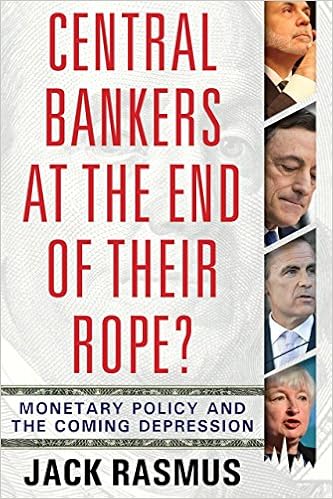
The US Federal Reserve 4.5 Trillion Sell-Off. “Central Bankers at the End of Their Ropes”

This past week the US central bank, the Federal Reserve, announced it would begin selling off its $4.5 trillion debt that it accumulated since 2008 by buying up investors’ toxic mortgage and T-bonds at above market rates.
The Fed has continually argued ever since 2008 this was necessary in order to ‘bail out the banks’. But the banks were bailed by 2010, and the free money from the Fed continued another six years. The Fed $4.5 trillion bond buying spree then drove down interest rates at which banks could borrow from the Fed to historic lows of 0.1%-0.25%, in effect further subsidizing the banks for 8 more years.
What was originally a bank bailout in 2008-09 thus became a more or less permanent ‘banking system subsidization’ program by the Fed, which has resulted in banks becoming addicted to the virtual free money. The Fed’s just announced start of selling its debt–which will have the effect of raising interest rates–is a mere token effort and won’t succeed in any serious reduction of its debt.
As I predict, and explain in my recent book, ‘Central Bankers at the End of Their Ropes’, Clarity Press, August 2017, the Fed now cannot raise rates beyond 2% (now at 1.25%) much without precipitating another financial crisis, or without collapsing currencies and economies in emerging markets, or without causing US multinationals offshore a major profits contraction, or without seriously undermining US exports and thus an already fragile US economy that already shows signs of slowing in 2018.
Thus the recent Fed announcement of sell off of its $4.5 trillion debt is a ‘token’ and a ‘fiction’. The Fed will be stuck with more than $4 trillion in debt by 2019, and will soon have to add even more to it when the next recession occurs circa 2019-20 or perhaps even sooner.
The Fed itself knows this. That’s why the announcement was a token $10 billion sell off per month, and marginally more thereafter. Before it reaches $.5 trillion in sales, and the 2% ceiling interest rate, it will have to stop, or even reverse its balance sheet selling. That means when the next recession or financial crisis occurs, the Fed will open the money spigot again and add still more to its debt–and now on top of the $4 trillion or so debt that will still remain. The US central bank is doomed to go ever deeper in debt in order to continue its program of private banking system ‘subsidization’, which has become a major characteristic of 21st century capitalism and banking. The private sector is becoming more and more dependent on the capitalist state and its central banks to prop up and support its long run faltering investment and profit trends. What was once termed a bank bailout function (called ‘lender of last resort’) has become a banking system ‘subsidization’ function.
This new role of the central bank in the 21st century has also contributed greatly to the growing financialization of global capitalism, as the central bank free money flows not into real investment to produce infrastructure and real goods but rather is increasingly diverted to financial asset markets creating bubbles in stocks, bonds, derivatives, foreign exchange, and property prices–an argument, with evidence, I provided in detail in my 2016 book, ‘Systemic Fragility in the Global Economy’, Clarity Press, January 2016′.
What follows are a couple of excerpts from my ‘Central Bankers at the End of Their Ropes’ book, specifically the chapter 14 on the Yellen Fed, that discusses how the Federal Reserve under Yellen–and before that under Bernanke and Greenspan as well–have evolved into the ‘subsidization’ function as a consequence of its decades-long free money injections into the banks have led to accelerating ‘financialization’ of the global capitalist system, and in turn more frequent and severe financial bubbles, crashes, and consequent recessions.

Excerpts from Jack Rasmus, “Central Bankers at the End of Their Ropes”
1. On Banking System Subsidization by the Fed
“Central bank financial subsidization policy raises the question as to whether the primary function of the central bank in the 21st century is more than just lender of last resort, or money supply management, or bank supervision, as has been the case in the past before 2008. Certainly those primary functions continue. But a new primary function has demonstrably been added: the subsidization of finance capital rates of return and profitability—regardless of whether the financial system itself is in need of bailout or not. Globalization has intensified inter-capitalist competition and that competition compresses prices and profits. So the State, in the form of the institution of the central bank, now plays an even more direct role in ensuring prices for financial assets are not depressed (or prevented from rising) by inter-capitalist global competition; and that global competition is more than offset by central banks becoming a primary source of demand for private sector financial assets. Excess liquidity drives demand for assets, which drives the price of assets and in turn subsidizes price-determined profitability of financial institutions in particular but also of non-financial corporations that take on the characteristics of financial institutions increasingly over time as well.
“Long after banks were provided sufficient liquidity, and those in technical default (Citigroup, Bank of America, etc.) were made solvent once again, the Yellen Fed has continued the Bernanke policy of massive and steady liquidity injection. Whether the tools are QE or open market operations, modern central bank monetary policy is now about providing virtually free money (i.e. near zero and below rates). Targets are mere justifications providing an appearance of policy while the provision of money and liquidity is its essence. Tools are just means to the end. And while the ‘ends’ still include the traditional primary functions of money supply and liquidity provision, lender of last resort and banking system supervision—there may now be a new function: financial system subsidization.
“The ideological justification of QE, ZIRP and free money for banks and investors has been that the financial asset markets need subsidization (they don’t use that term however) in order to escalate their values in order, in turn, to allow some of the vast increase in capital incomes to ‘trickle down’ to perhaps boost real investment and economic growth as a consequence. They suggest there may be a kind of ‘leakage’ from the financial markets that may still get into creating real things that require hiring real people, that produce real incomes for consumption and therefore real (GDP) economic growth. But this purported financial trickle down hardly qualifies as a ‘trickle’; it’s more like a ‘drip drip’. It’s not coincidental that the ‘drip’ results in slowing real investment and therefore productivity and in turn wage growth. This negative counter-effect to central bank monetary policy boosting financial investment and financial markets now more than offsets the financial trickle-drip of monetary policy. The net effect is the long term stagnation of the real economy.
“The Fed’s function of money supply management may be performing well for financial markets but increasingly less so for the rest of the real economy. That was true under Bernanke, and that truth has continued under Yellen’s Fed as well. Central bank performance of the money supply function is in decline. The Fed is losing control of the money supply and credit—not just as a result of accelerating changes in global financialization, technology, or proliferation of new forms of credit creation beyond its influence. It is losing control also by choice, as it continually pumps more and more liquidity into the global system that causes that loss of control.”
2. The Fed’s $4.5 Trillion Balance Sheet Sell-Off
“From 2008 through May 2017, QE and other Fed liquidity programs raised the Fed’s balance sheet from $800 or so billion to $4.5 trillion. The QE programs ended in October 2014. Since then payments on bonds to the Fed could have reduced the Fed’s balance sheet. However, the Fed simply reinvested those payments again and kept the balance sheet at the $4.5 trillion level. In other words, it kept re-injecting the liquidity back into the economy—in yet another form indicating its commitment to keep providing excess liquidity to bankers and investors.
“Throughout the Yellen Fed discussions and debates have continued about whether the Fed should truly ‘sell off’ its $4.5 trillion and stop re-injecting. That would mean taking $4.5 trillion out of the economy instead of putting it in. It would sharply reduce the money supply and liquidity. It has a great potential to have a major effect raising interest rates across the board, with all the consequent repercussions—a surge in the US dollar, reducing US exports competitiveness and GDP; provoking a ‘tantrum’ in EMEs far more intense than in 2013, with EME currency collapse, capital flight, and recessions precipitated in many of their economies. It would almost certainly also cause global commodity prices to further decline, especially oil, and slow global trade even more.
“Finally, no one knows for sure how sensitive the US economy may be, in the post-2008 world, to rapid or large hikes in interest rates. Over the past 8-plus years, the US economy has become addicted to low rates, dependent on having continual and greater injections. Weaning it off the addiction all at once, by a sharp rise in rates due to a sell-off of the Fed’s $4.5 trillion, may precipitate a major instability event. The US economy may, on the other hand, have become interest-rate insensitive to further continuation of zero rates, or even forays into negative rates(as in Europe and Japan) as a result of the 8 year long exposure to ZIRP.. In contrast, that same addiction may mean the economy is now also highly interest rate sensitive to hikes in interest rates. As economists like to express it, it may have become interest-rate inelastic to reductions in rates but interest-rate highly elastic to hikes in rates. But it is not likely that Fed policymakers, or mainstream economists, are thinking this way. Their ‘models’ suggest it doesn’t matter if the rates are lowered or raised, the elasticities are the same going up or going down. But little is the same in the post-2008 economy.
“Notwithstanding all the possible negative economic consequences of disposing of the $4.5 trillion, this past spring 2017 the Fed reached an internal consensus of to begin doing so. That consensus maintained that an extremely slow and pre-announced reduction of the balance sheet would not disrupt rates significantly. But as others have noted, “such an assessment is complacent and dangerously incomplete”.
Selling off the $4.5 trillion would mean lost interest payments to the US Treasury amounting to more than $1 trillion, according to Treasury estimates. That’s $1 trillion less for US spending, with all it implies for US fiscal policy in general as the Trump administration cuts taxes by $trillions more and raises defense spending. In other words, sell-off may result in a further long-term slowing of US GDP and the real economy.

Deutsche Bank: "Global Asset Prices Are The Most Elevated In History"

In an extensive report published this morning by Deutsche Bank's Jim Reid, the credit strategist looks at the "Next Financial Crisis", and specifically what may cause it, when it may happen, and how the world could respond assuming it still has means to counteract the next economic and financial crash. While we will have much more to say on this study in upcoming posts, we wanted to bring readers' attention to one observation made by Reid, namely that "we’re in a period of very elevated global asset prices – possibly the most elevated in aggregate through history."
Here are the details on what appears to be the biggest asset bubble ever observed, courtesy of Deutsche Bank:
Figure 57 updates our analysis looking at an equal weighted index of 15 DM government bond and 15 DM equity markets back to 1800. For bonds we simply look at where nominal yields are relative to history and arrange the data in percentiles. So a 100% reading would mean a bond market was at its lowest yield ever and 0% the highest it had ever been. For equities valuations are more challenging to calculate, especially back as far as we want to go. In the 2015 study (‘Scaling the Peaks’) we set out our current methodology but in short we create a long-term proxy for P/E ratios by looking at P/Nominal GDP and then look at the results relative to the long-term trend and again order in percentiles. Nominal GDP data extends back much further through history than earnings data. When we have tracked the two series where the data overlaps we have found it to be an excellent proxy. Not all the data in Figure 57 starts at 1800 but we have substantial history for most of the countries (especially for bonds).


As can be seen, at an aggregate level, an equally weighted bond/equity portfolio has never been more expensive. Figure 58 shows that bonds are much closer to 100% than equities though and Figure 59 then looks at the raw data for bonds showing average G7 yields back to 1800.


It’s easier to be black and white in terms of bonds long-term value. In short there isn’t any relative to history. For equities it’s more difficult to assess partly because they are a real asset and therefore today could be a good time to buy if one felt that despite relatively high valuations, inflation may permanently increase (or better still real GDP growth) and thus lead to eventually permanently higher earnings notwithstanding any short-term negative implications of the inflationary transition. However our technique looks at valuations relative to what we know now and where we are relative to history.

For equities, current valuations are certainly stretched relative to nominal GDP through history. We have been more expensive but we are approaching the peaks of 2000 and 2007 and are in line with the most stretched valuations from the 1930s on this metric and higher than the 1929 crash point.

Given how weak nominal and real GDP has been post GFC (Figure 60), and how much of a downward trend both have been for several decades now, this shouldn’t be a surprise.

Nominal and real GDP growth rates have been trending down and unless equity returns slow relative to the past, then valuations on our measure will go up. Obviously if profits take up a bigger share of GDP for a period of time our method will look more stretched than traditional P/E ratios. However over the longer-term, this should be mean reverting as profits can’t permanently outstrip nominal growth – especially at a global level. Currently there is some evidence that the US is one area where actual earnings have outstripped nominal growth in recent years for various reasons that include their large global players gaining excess overseas earnings (must be a zero sum game globally), a more shareholder friendly and focused culture and perhaps higher inequality and therefore more spoils to capital over labour.

However we’d repeat that history suggests all this is mean reverting over the medium to long term. If we look at more detail on the US which has the most developed history of equity data, including the longest series of earnings data through history we can see the longer term issues with equity market valuations.

Indeed the US CAPE ratio (Figure 61) has only been higher before the 2000 equity bubble bursting and was only slightly higher ahead of 1929 crash. CAPE analysis cyclically adjusts earnings by using the average of the last 10 years so you would have to believe the higher earnings of the last decade represent a new paradigm to not be concerned by this graph.

DB's conclusion: "While there are no obvious triggers for historically high global asset valuations to correct, while they remain this high there is always a risk of a sudden correction that could be destabilising to a financial system and global economy that seems to require such elevated asset prices."

Fonte: qui